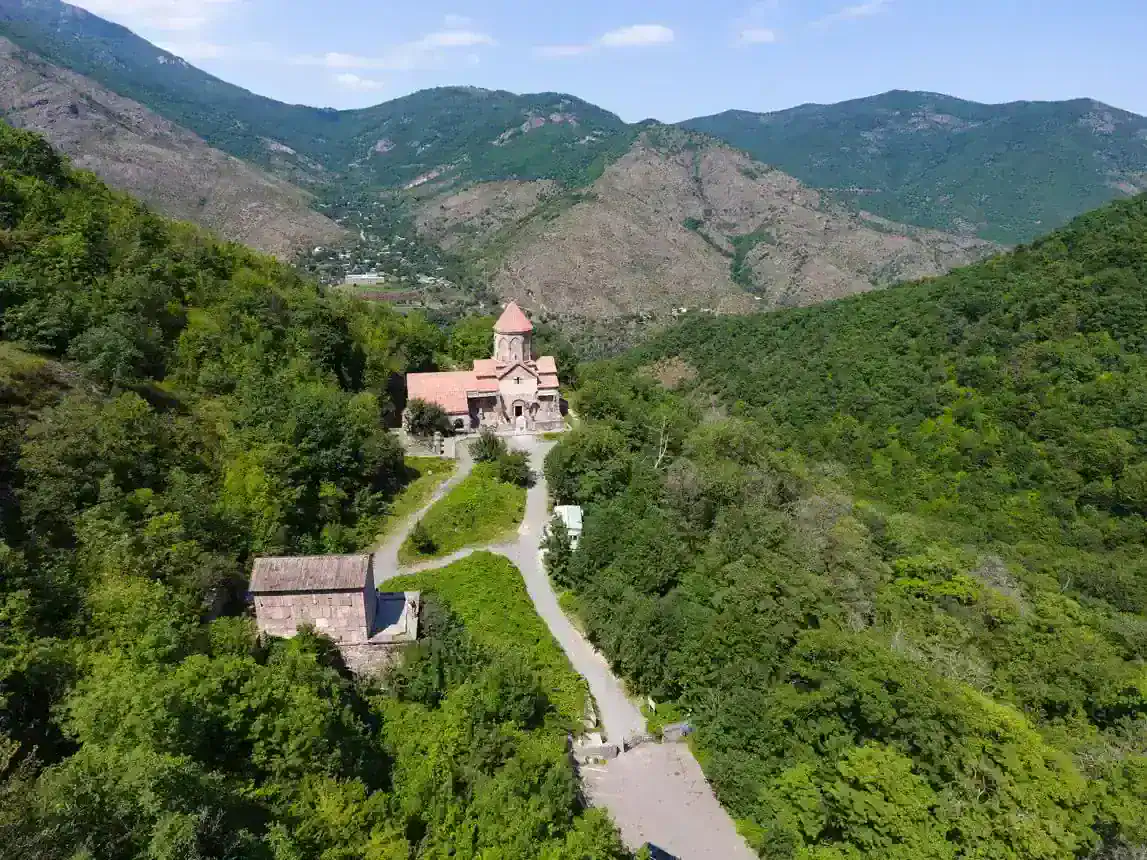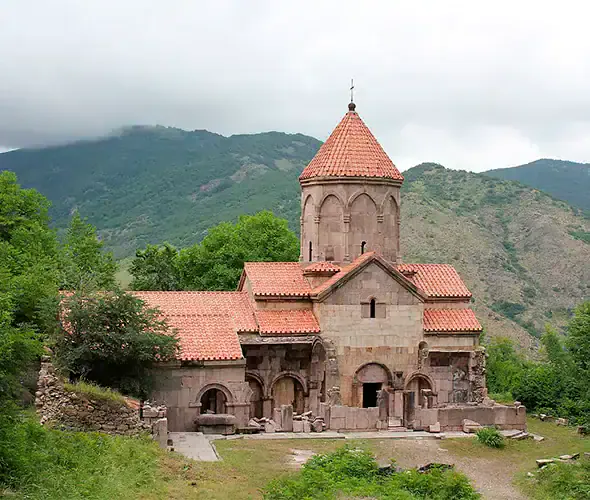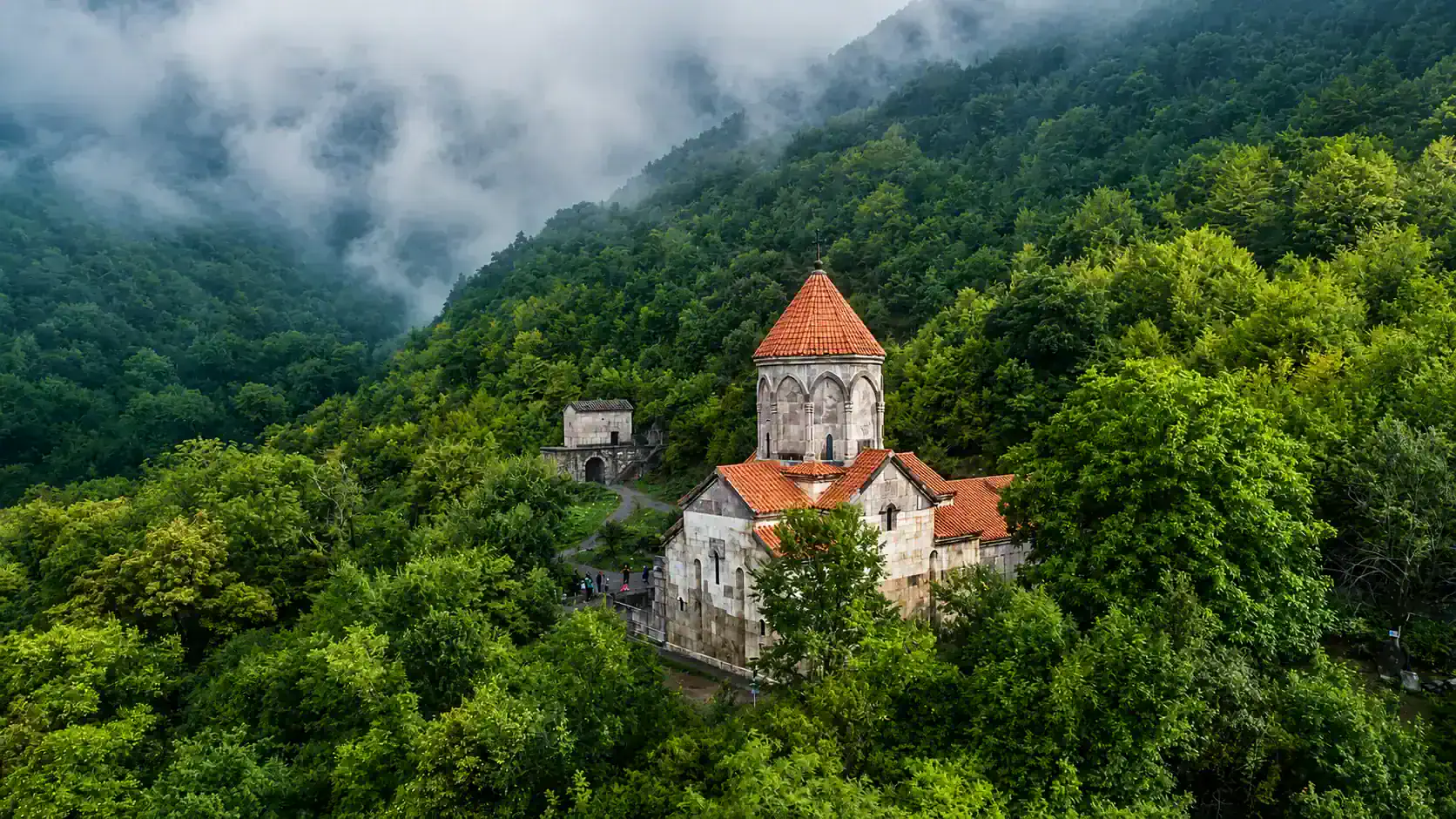
Vahanavank is a peaceful old monastery on a green, wooded hill near Kapan, the main town of Syunik in the far south of Armenia. It was founded in 911 AD by a prince named Vahan, and it later became the place where the kings and princes of Syunik were buried. Its stone churches and gavit (entrance hall) were built in the style of the Bagratuni period. With forest and mountains all around, it feels calm and quiet. Far fewer people come here than to nearby Tatev, so it is a great spot if you want history without the crowds.
There is a cool story about how it began. An old historian named Stepanos Orbelian wrote that Prince Vahan was troubled by something people back then called “demonic possession.” To find peace, he gave up his life as a prince, became a monk, and in 911 he brought a hundred monks together to build the church of Surb Grigor (St. Gregory the Illuminator). It is the oldest building here, and Vahan was buried right next to its door. The spot was special long before that, too: the monastery sits on top of a Bronze Age burial ground that is more than 3,000 years old.
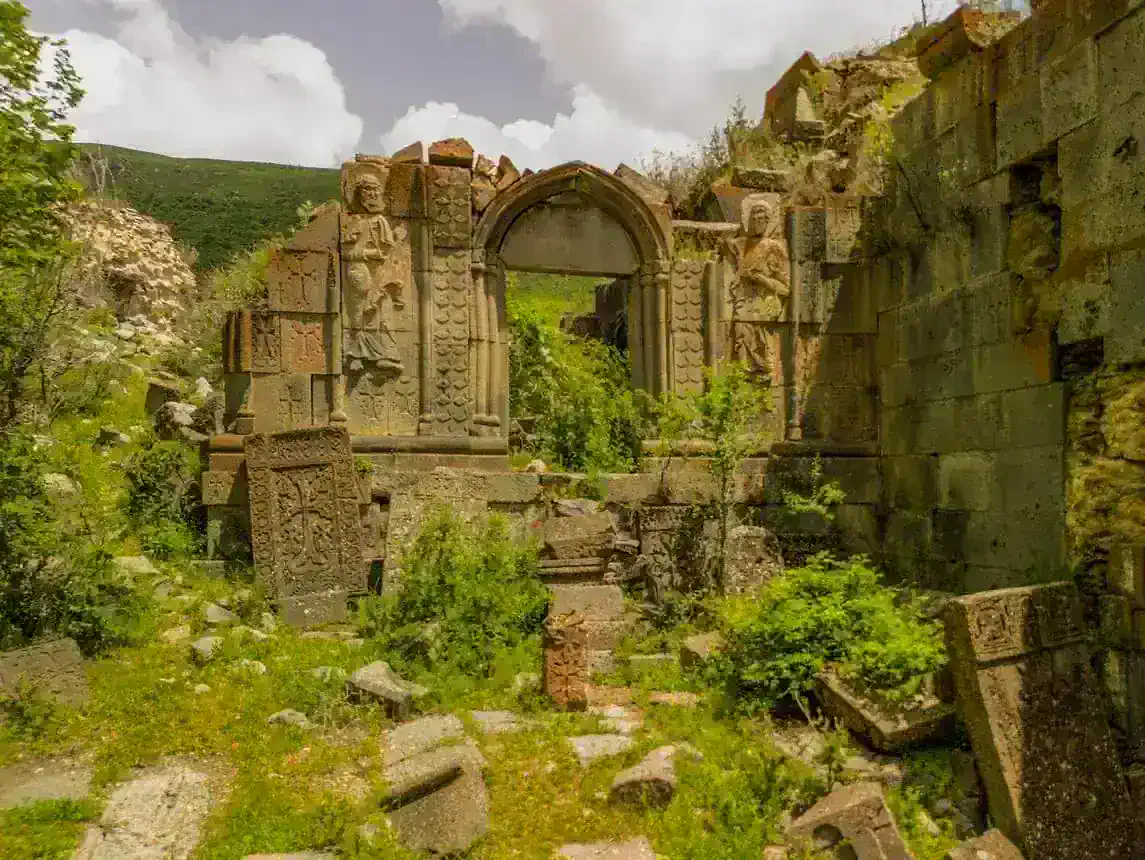
Vahanavank soon became more than just a church. A school opened here, and students came from all around. One of them was Vahan’s nephew, who later became the Bishop of Syunik and then Catholicos — the leader of the Armenian Church. The monastery also became the burial place of Syunik’s royal family. In 1086, Queen Shahandukht II and her sister Katan built another church here, Surb Astvatsatsin (Holy Mother of God), as a family tomb. You can still see their old carved gravestones and khachkars (Armenian cross-stones), plus pretty carvings of plants and animals on the walls.
A few useful details: Vahanavank stands about 5 km west of Kapan, at the foot of Mount Tigranasar and on the right bank of the Voghji River. Work to restore the old monastery began in 1978 and went on until 1990, though it was never fully finished. It is an easy stop to include on a multi-day trip through southern Armenia.
Ready to explore? Check our tours to Syunik.