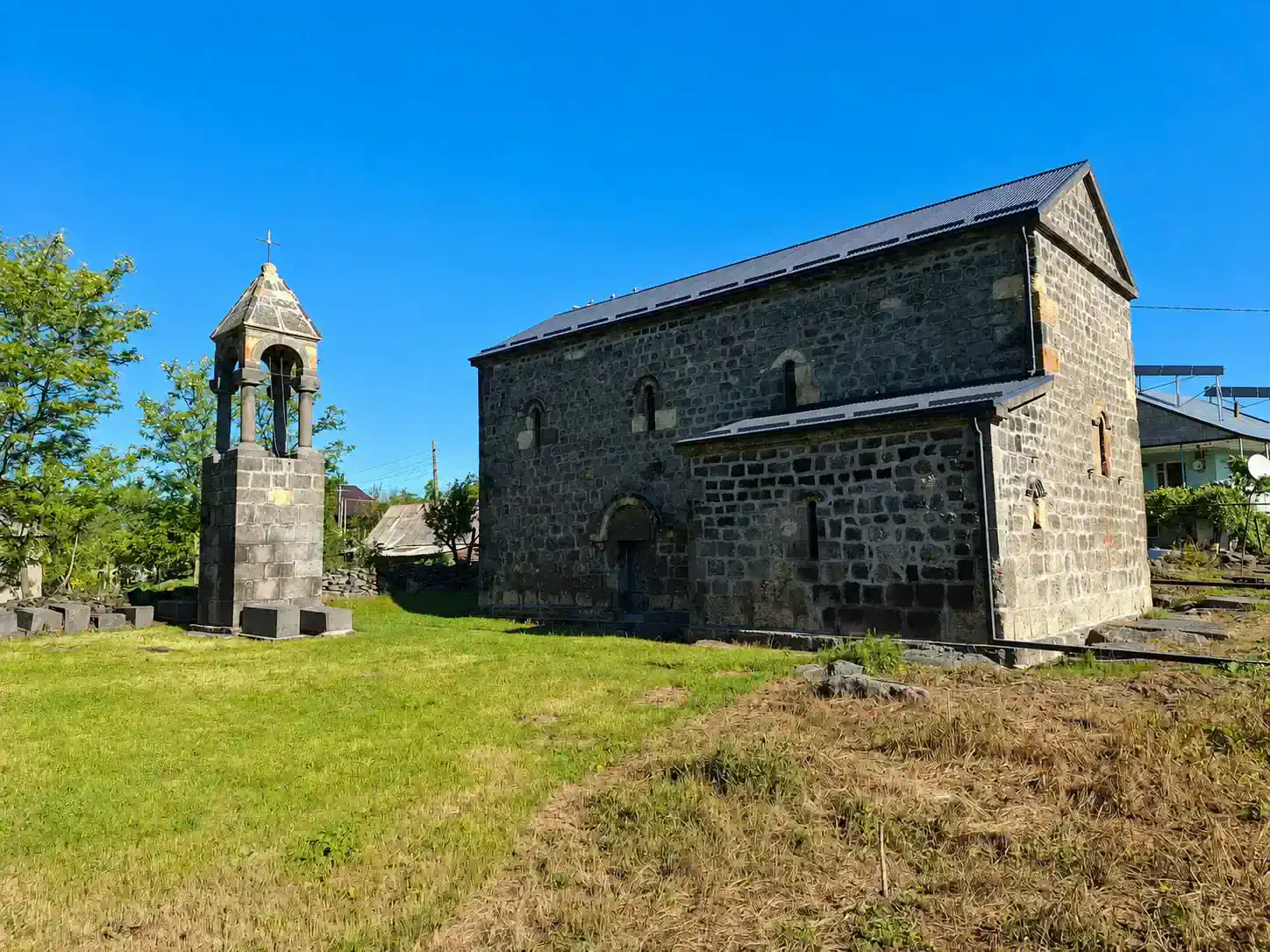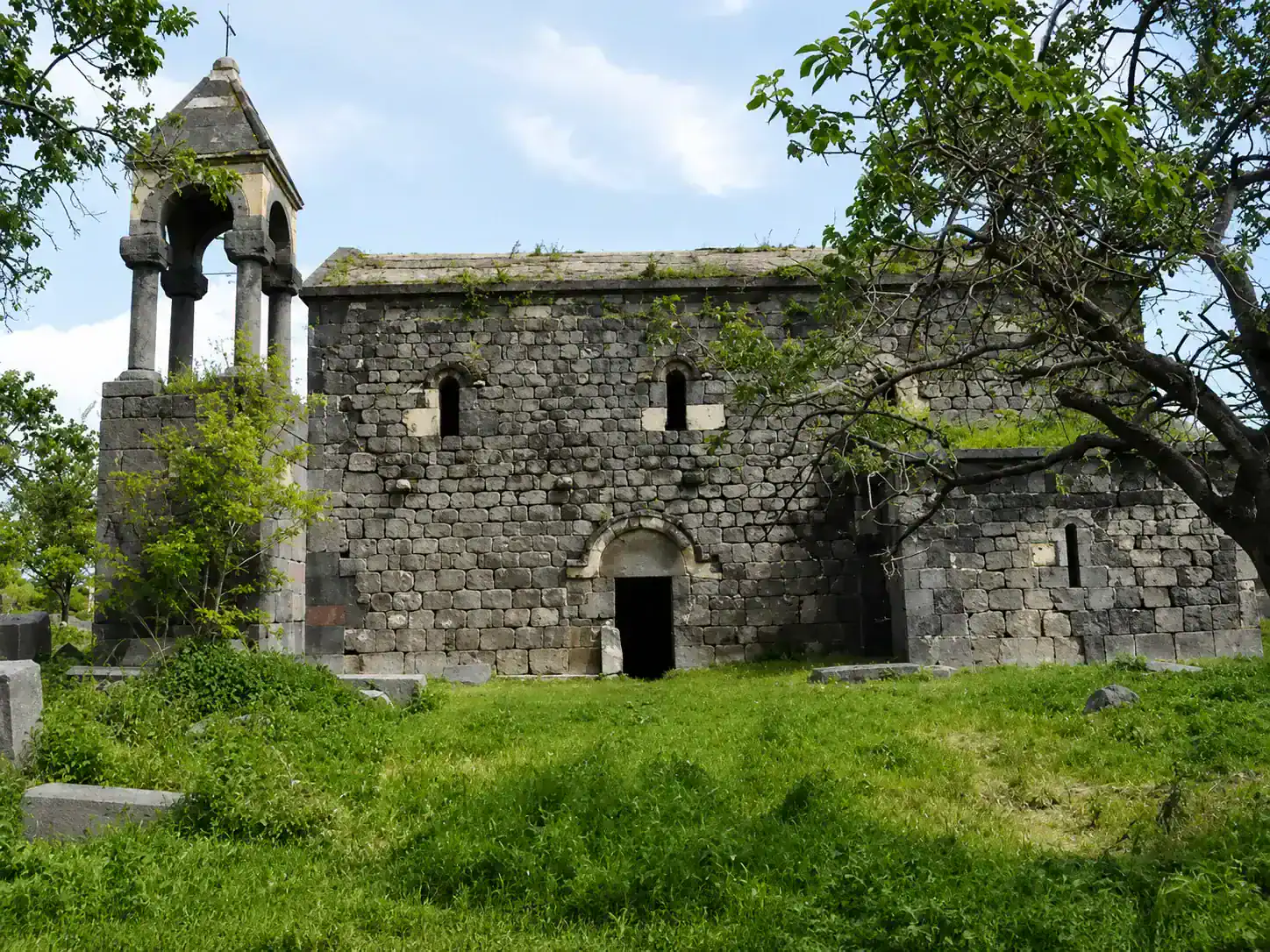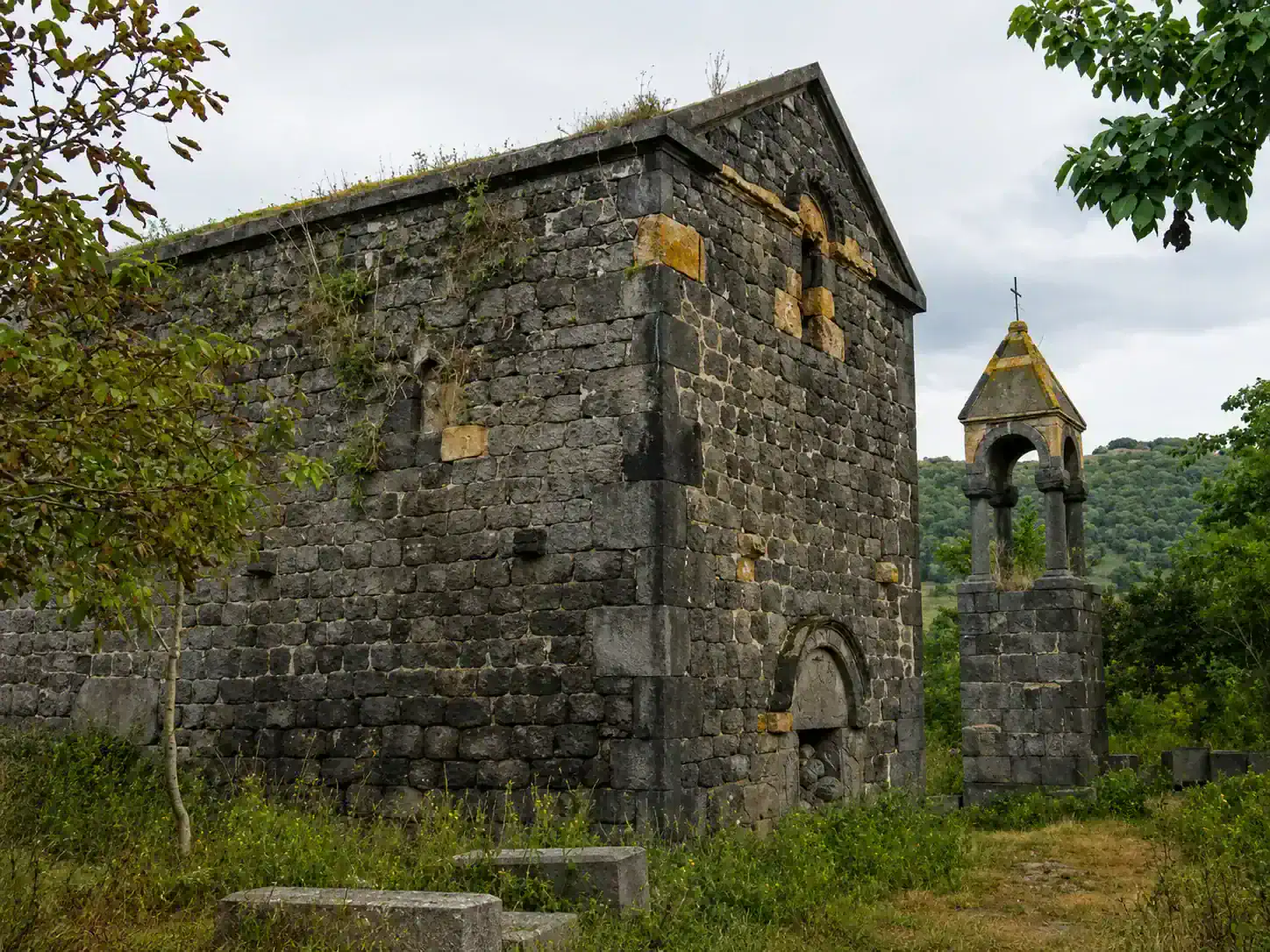
The Church of the Holy Mother of God is situated on level ground in the village of Kurtan, Lori Province. It is a single-nave church dating to the 5th century, in the early medieval period. The churches of Tormak, Hovardzi, and Gtevank are located approximately 3–4 km away.
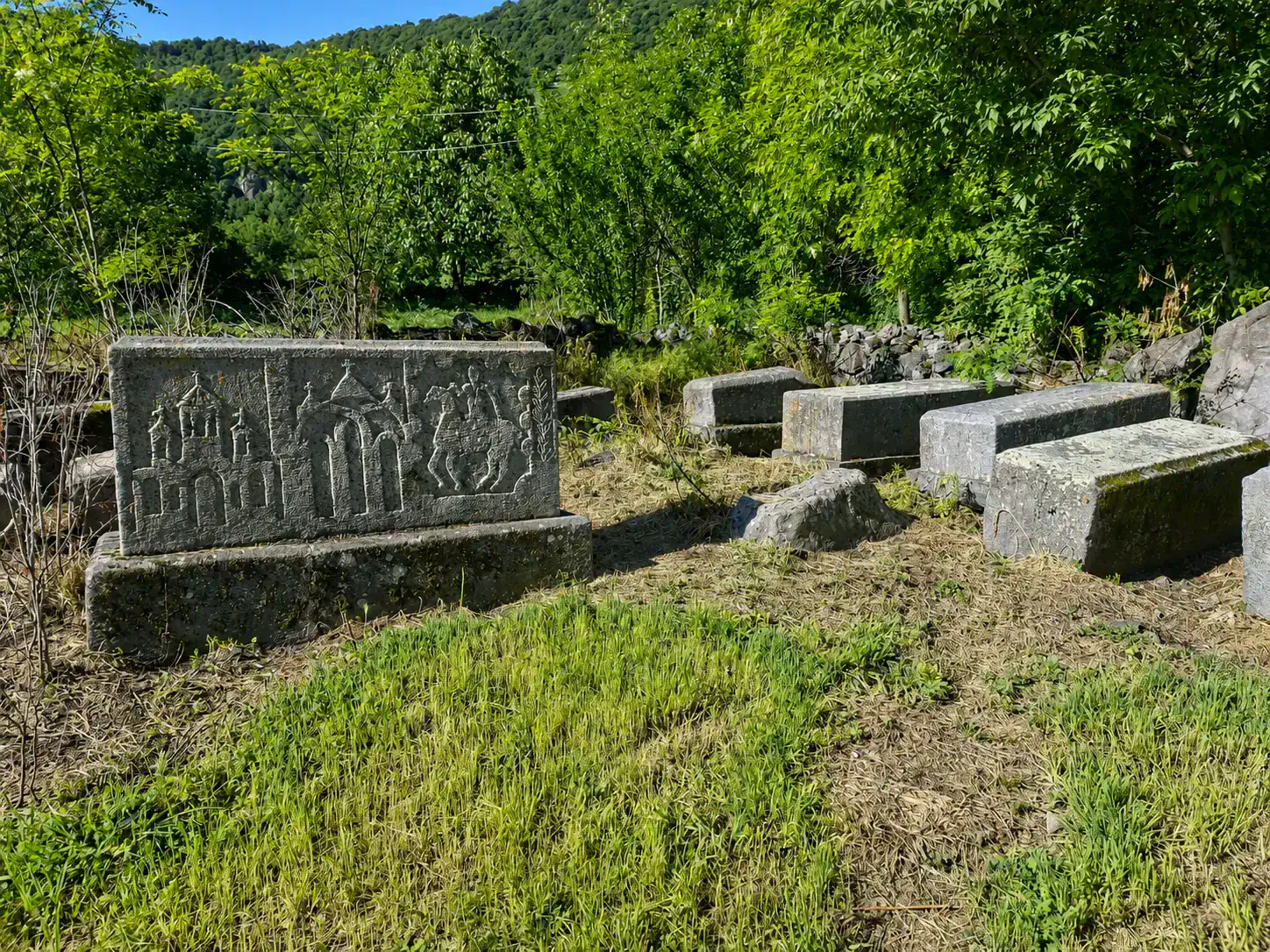
A bell tower was built on the western side of the church in the 19th century, while gravestones from different periods have been preserved to the south. Their presence indicates that the church remained in use until the 19th century. Kurtan Church has three entrances, located on its northern, southern, and western sides.
The monument consists of a prayer hall with a horseshoe-shaped vault, measuring 12.80 metres in length and 5.25 metres in width, as well as a side chamber. A stone decorated with carved crosses can be seen in the northern part of the chamber. However, according to Armenian architect M. Hasratyan, it was brought to Kurtan Church during restoration work. The church was restored between 1982 and 1984.
The building is constructed from dressed andesite bonded with lime mortar. Finely cut basalt was used in the structurally important areas, including the corners, wall piers, arches, and edges of the openings.
Like many Armenian churches built between the 4th and 7th centuries, Kurtan Church is also distinguished externally by its semicircular mouldings and cornices.