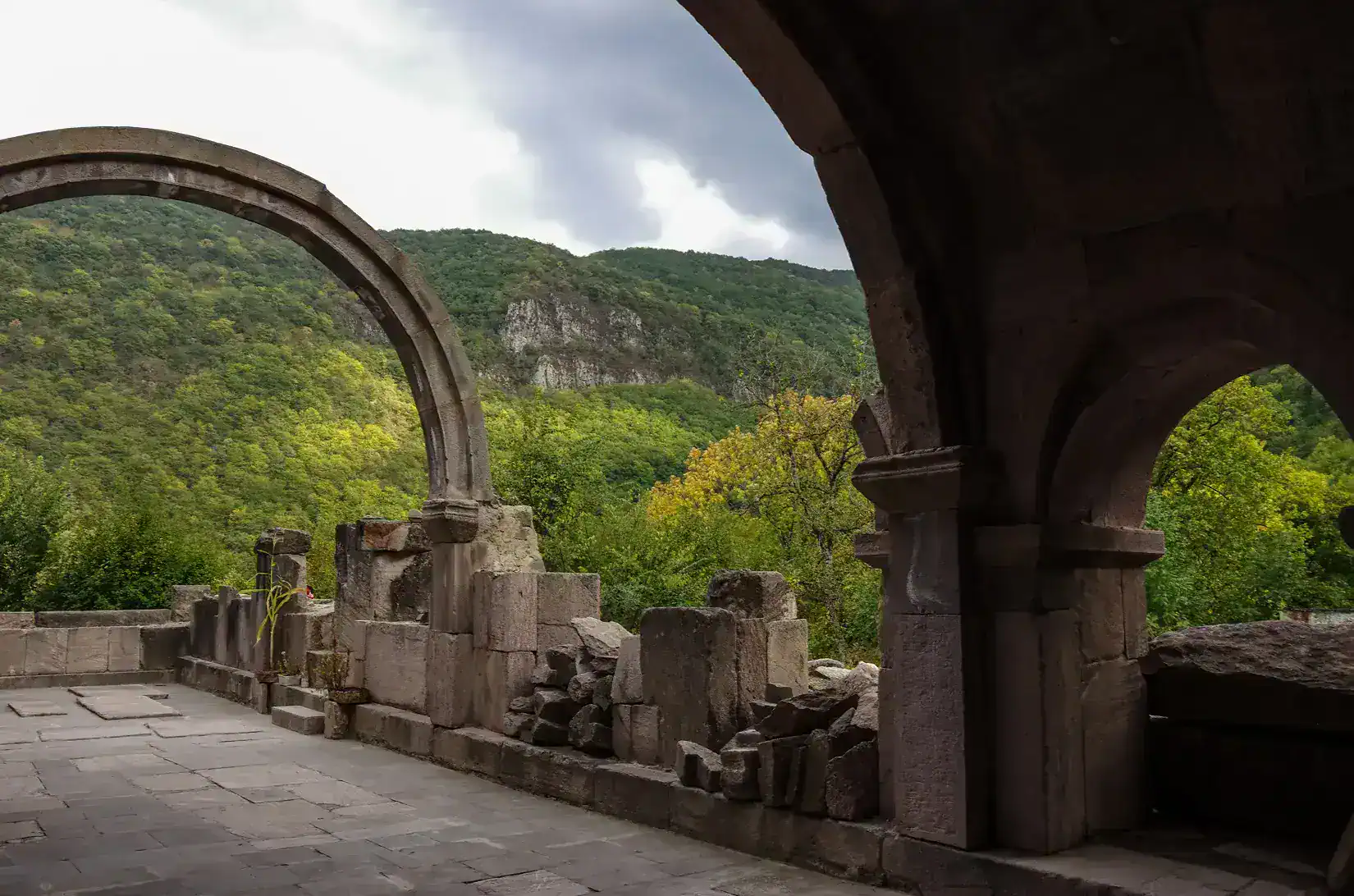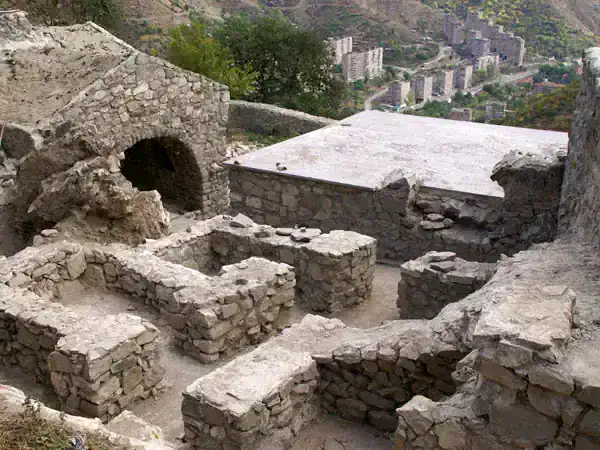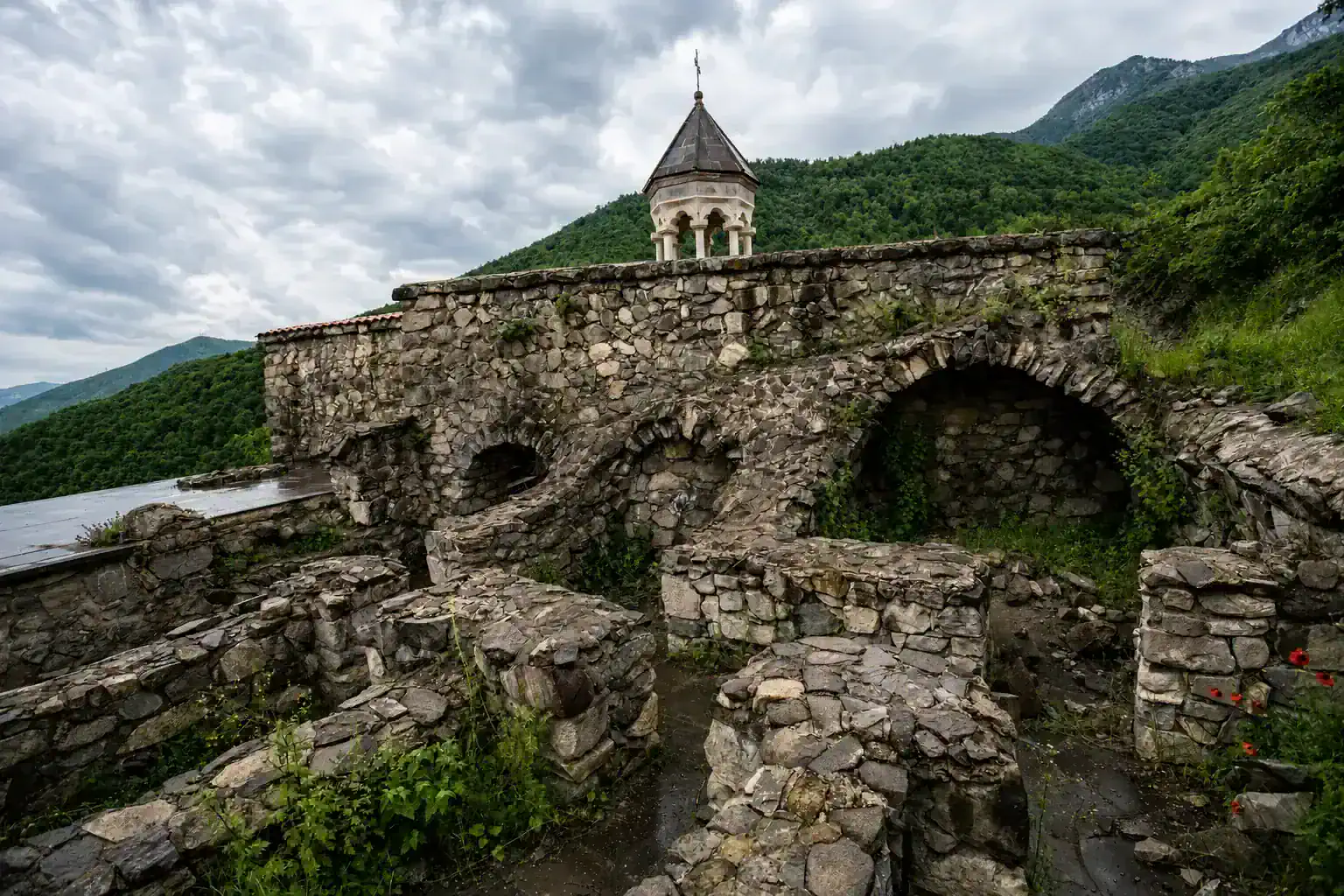
Tucked into the forested mountains of Syunik, high above the rushing Voghji River and just a short drive from the town of Kapan, Halidzor Fortress feels like a secret the landscape has been keeping for centuries. Perched on a hilltop more than 1,000 metres above sea level, its weathered stone walls rise straight out of the green slopes, with sweeping views over the valley below. It is the kind of place where the past feels close enough to touch – peaceful and almost forgotten today, yet once one of the most defiant strongholds in all of Armenia.
The fortress began life in the 17th century, when local Armenian lords known as meliks built it not as a military base but as a quiet nunnery. Its real fame came in the 1720s, when the legendary commander David Bek and his right-hand man Mkhitar Sparapet turned Halidzor into the beating heart of an armed uprising. From behind these walls they ran the Armenian liberation struggle across Syunik, holding their ground against the powerful armies of the Ottoman Empire and Safavid Persia as the two empires fought for control of the South Caucasus.
Halidzor's most famous chapter is the Battle of Halidzor in the spring of 1727. According to Armenian chronicles, a garrison of only around 300 defenders held out against an Ottoman force said to number in the tens of thousands. A secret tunnel running some 500 metres down to the river kept them supplied with water through a brutal seven-day siege. When food ran low and the situation looked hopeless, Bek gambled everything on a furious charge straight down the hillside – and the stunned attackers broke and fled. Bek died of illness at the fortress the following year, and tradition says he was buried just outside the walls beneath a stone carved with a single hidden flower, so that his enemies would never recognise the grave of their greatest foe. An elderly bishop from nearby Tatev Monastery is said to have travelled here to lead his funeral.
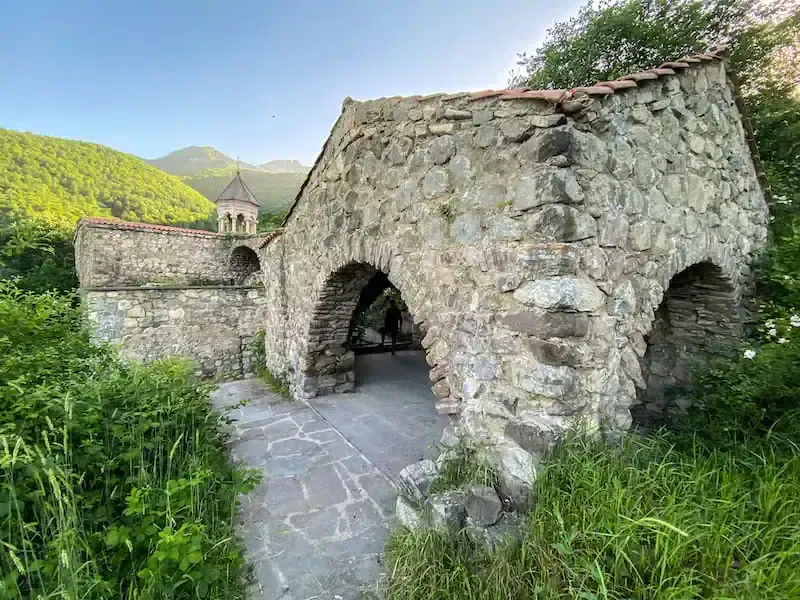
Today the site has been partly restored, and you can wander the irregular ring of walls, the ruined church of Surb Minas, and the arched gateways that once guarded the entrance. The rough access road means you may need a sturdy vehicle or a short walk to reach it – but that only adds to the feeling of discovery. Halidzor sits naturally alongside the other dramatic corners of Syunik, from the cliff-top monastery reached by the Wings of Tatev ropeway to the crumbling Baghaberd Fortress and the medieval Vahanavank monastery near Kapan. You can find the best tours to the region on our tours page.