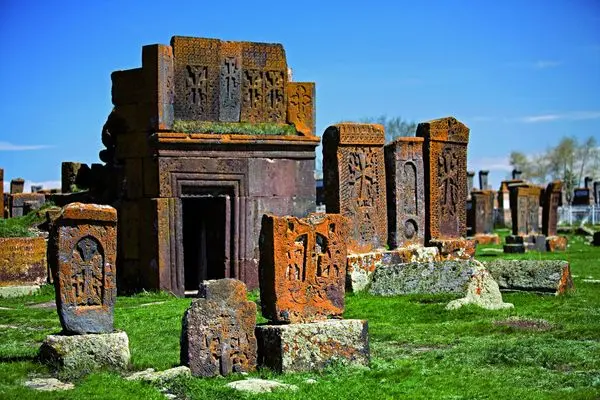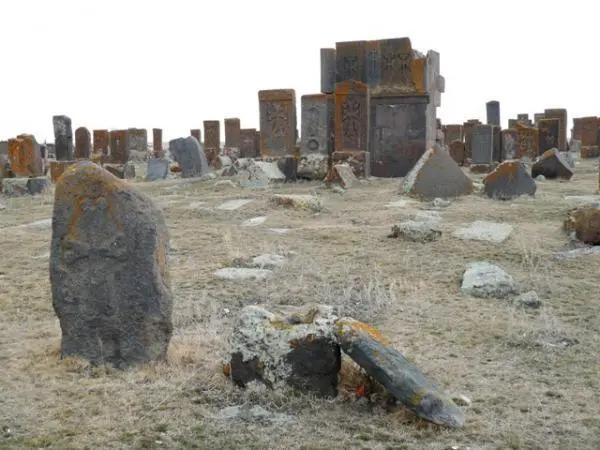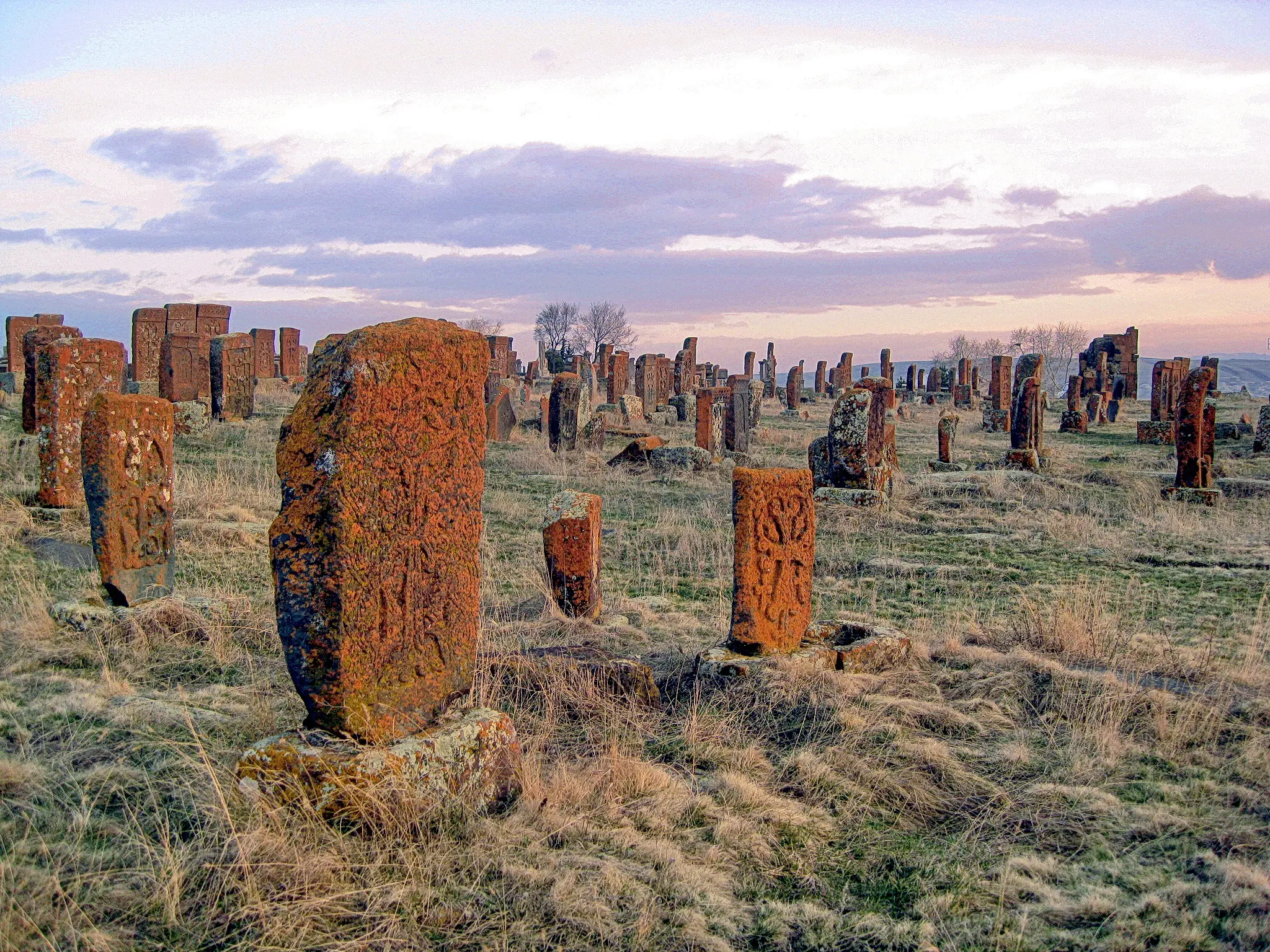
Nestled on the shores of Lake Sevan in the Gegharkunik Province, Noratus Cemetery stands as a breathtaking open-air museum and the largest surviving collection of Armenian khachkars in the world.
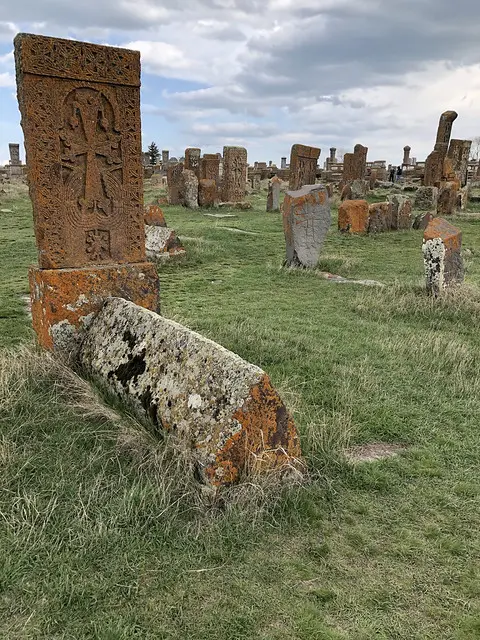
Often referred to as a "Forest of Khachkars," this seven-hectare site is home to nearly a thousand intricately carved cross-stones, each telling a unique story of faith, craftsmanship, and local history. These stones date primarily from the 9th to the 17th centuries, showcasing the evolution of Armenian medieval art and its recognition by UNESCO as an Intangible Cultural Heritage.
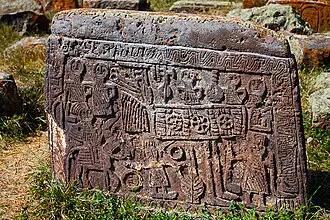
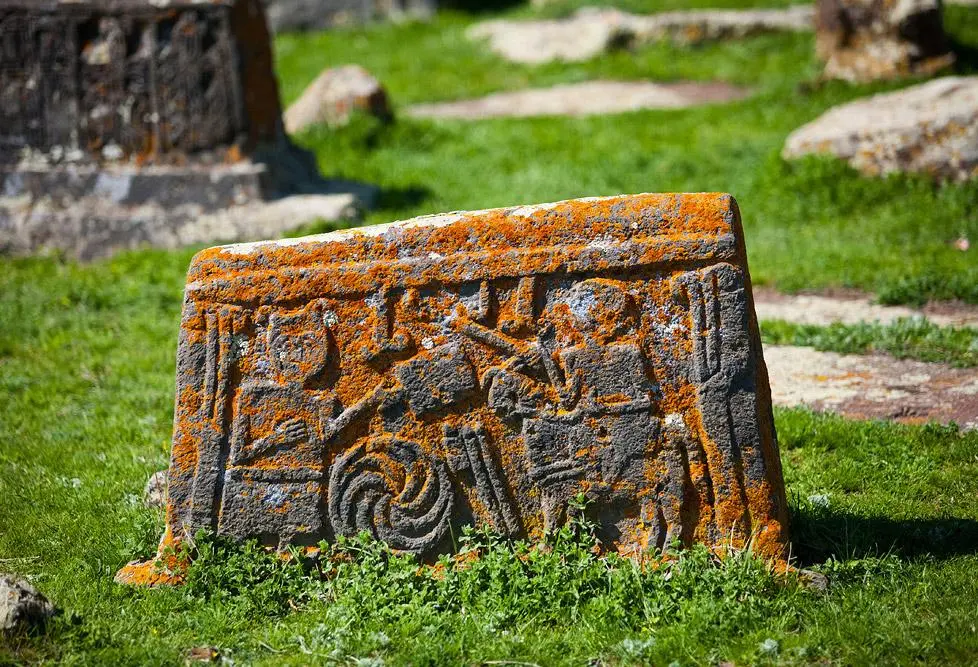
Visitors to Noratus will find more than just religious symbols; the cemetery is a gallery of daily life in medieval Armenia. While the front of the stones features the characteristic elaborate crosses and solar discs, the flat tombstones at their base often depict secular scenes like weddings, hunting trips, or farm work, offering a rare glimpse into the lives of the people buried there. One of the most famous legends of the site tells of a local victory against invading forces, where villagers supposedly dressed the khachkars in helmets and cloaks to trick the enemy into thinking a massive army was standing guard.
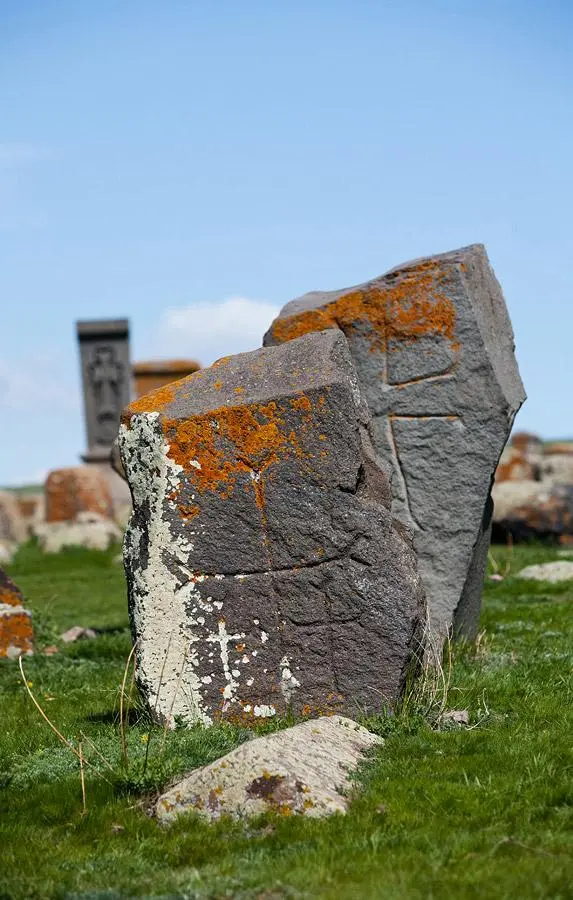
Walking through the weathered, moss-covered stones provides a profound sense of tranquility and connection to the past. The site is easily accessible from Yerevan and is best paired with a visit to the nearby Sevanavank Monastery.
Whether you are a history enthusiast or a photographer seeking the golden hour light hitting the orange volcanic tufa, Noratus offers an atmospheric journey through the heart of Armenian identity.