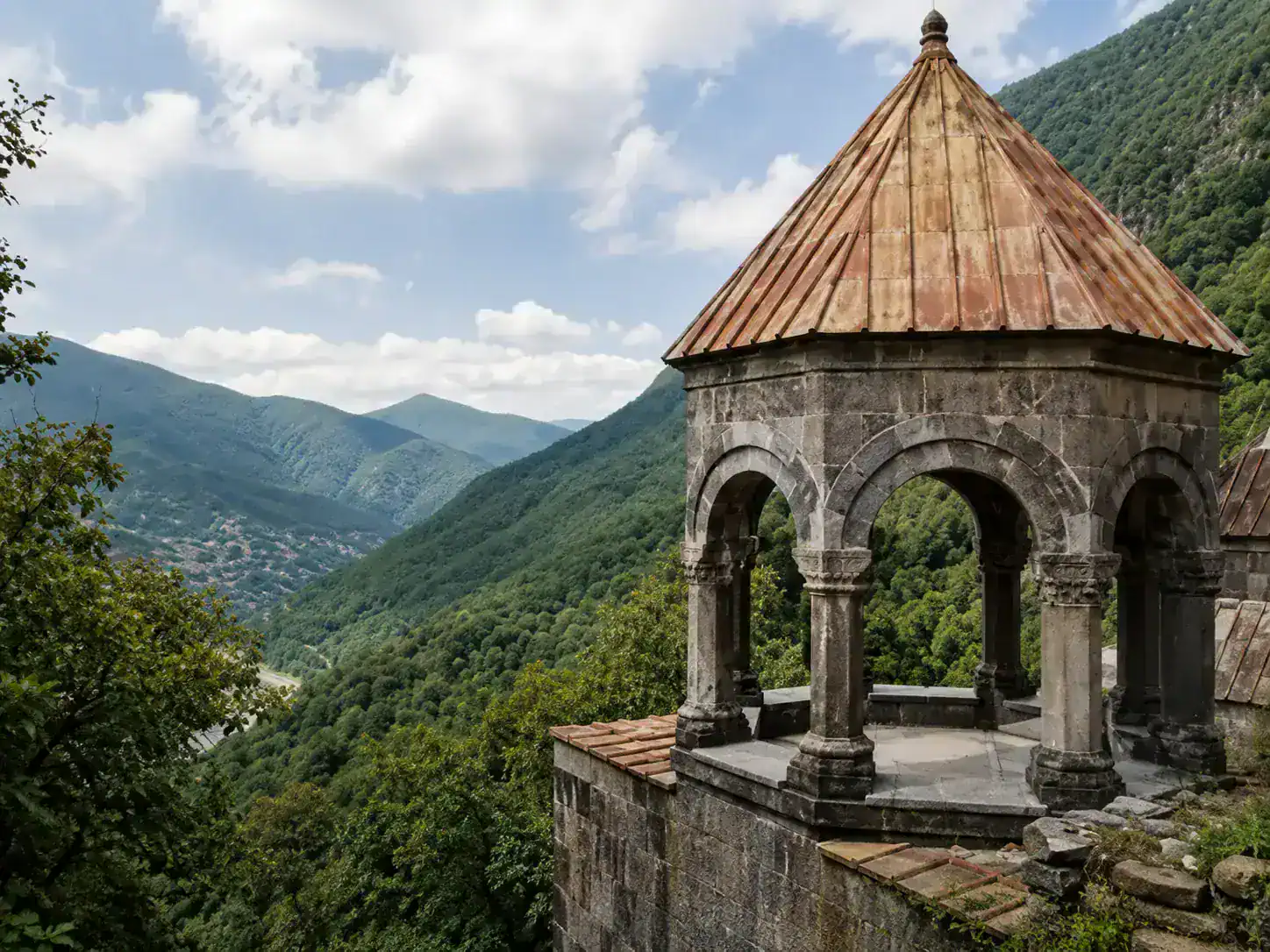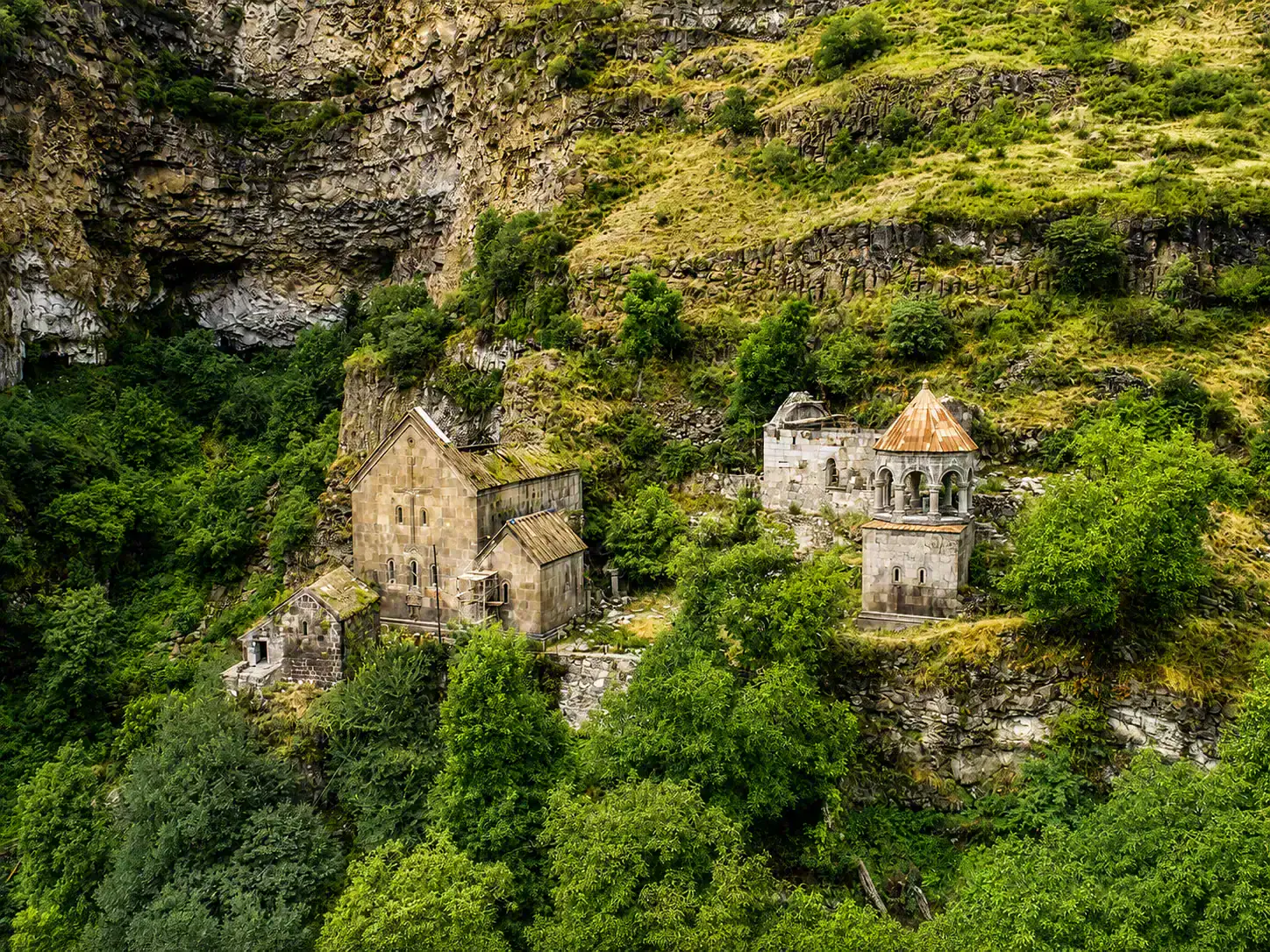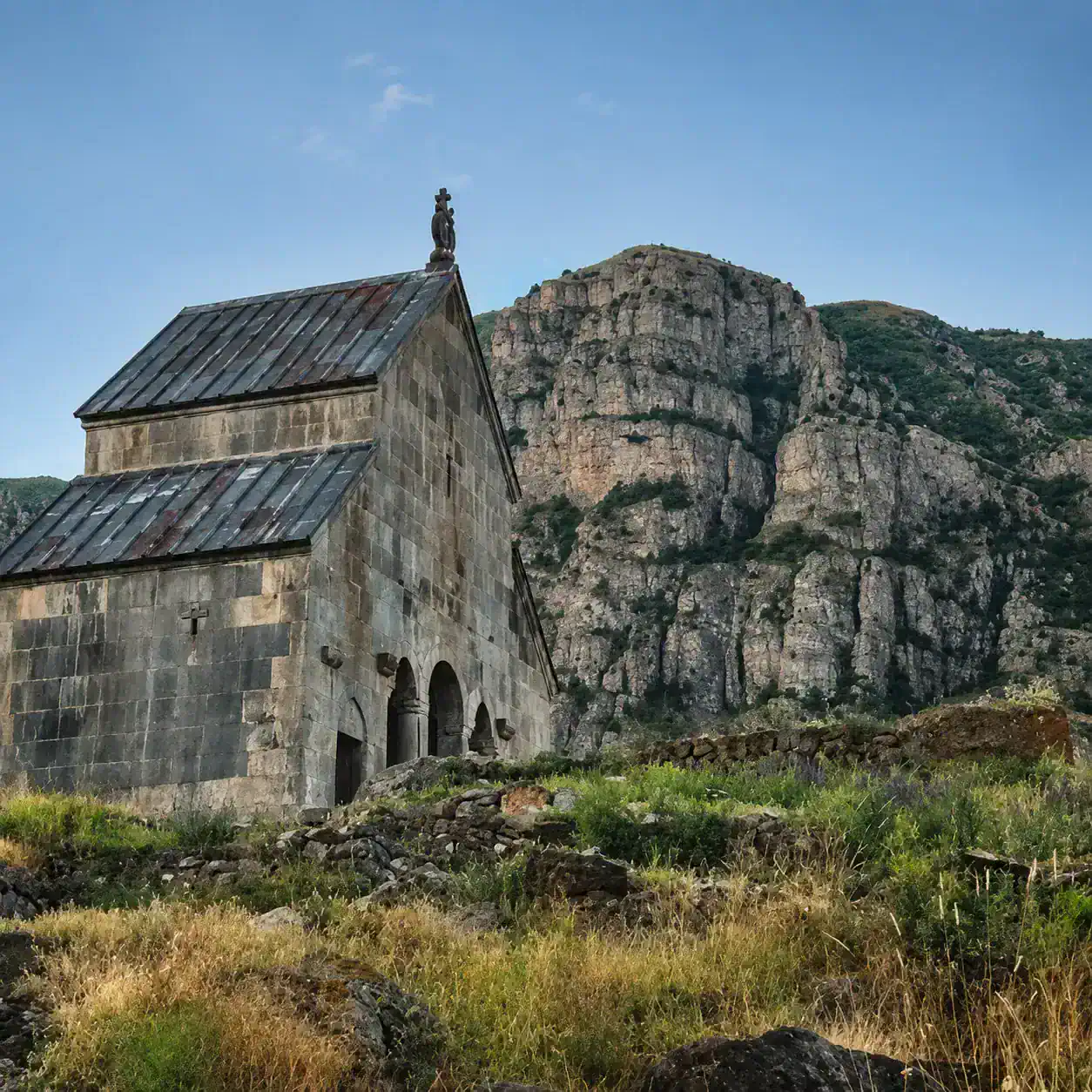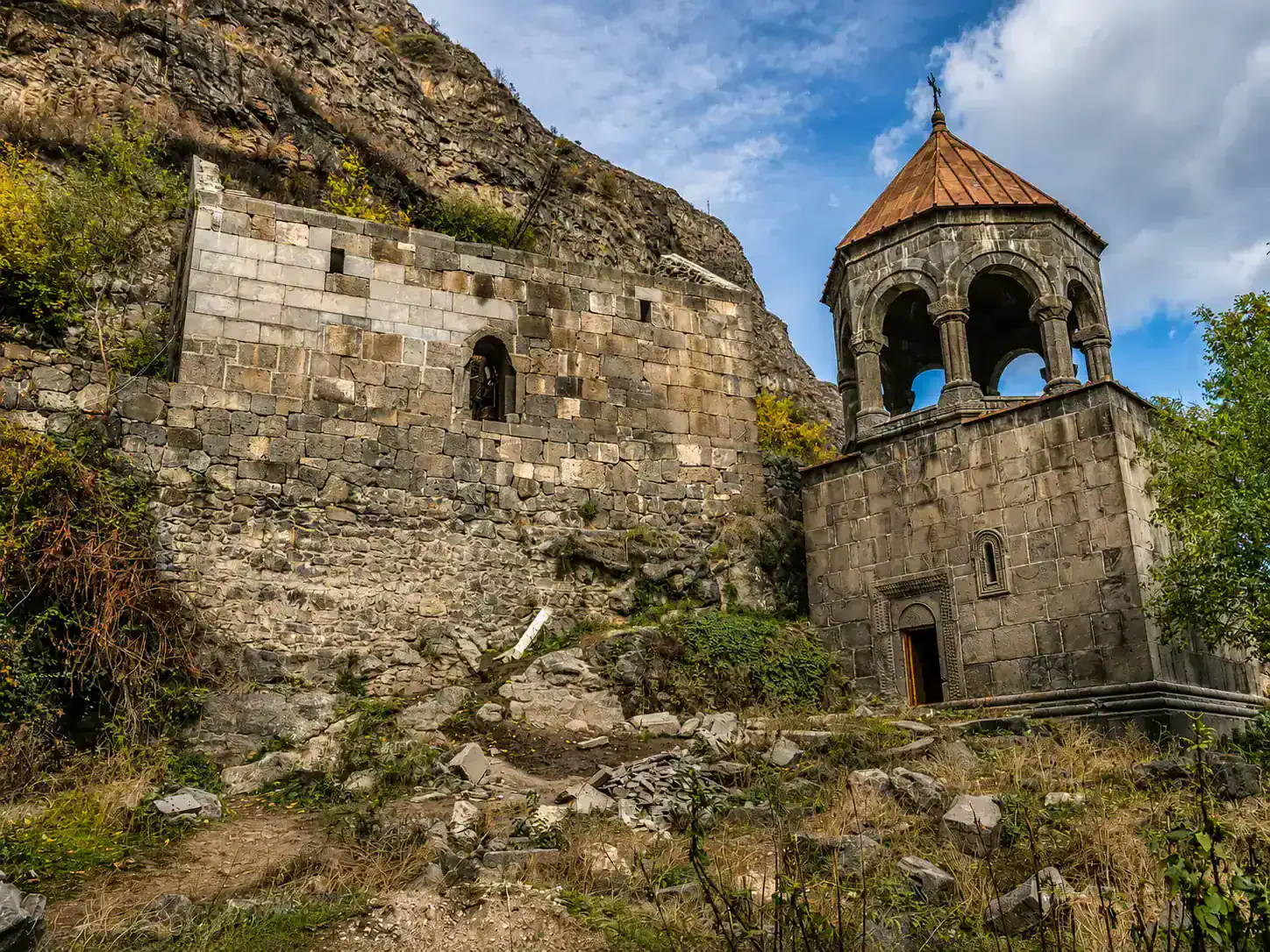
Kobayr Monastery is located in the Lori region, in the area of Kobayr village, west of the Kober railway station, on the left slope of the Debed gorge. The complex's structures stand on platforms of varying heights formed among the rocks. Fragments of churches, chapels, the wall, a refectory, and secular buildings have survived here.
The oldest dated structure in the complex is the Mariamashen Church. An inscription carved into the lintel of the western entrance states that it was built in 1171 by Mariam, daughter of King Kyurike II. The church is single-naved and was covered by a semi-cylindrical vault. The round window above the entrance is surrounded by decorative carved rings, and above it is carved an equal-armed cross set within a circle.
In 1279, an open-arched bell tower-mausoleum was built in the complex. A Georgian inscription preserved on its southern wall mentions Shahnshah's son and his wife, Vaneni. During the Zakaryan period, Kobayr also served as a burial place for the princely family.
At the entrance to the bell tower, a three-letter Greek abbreviation is carved, derived from the Greek word for "church."
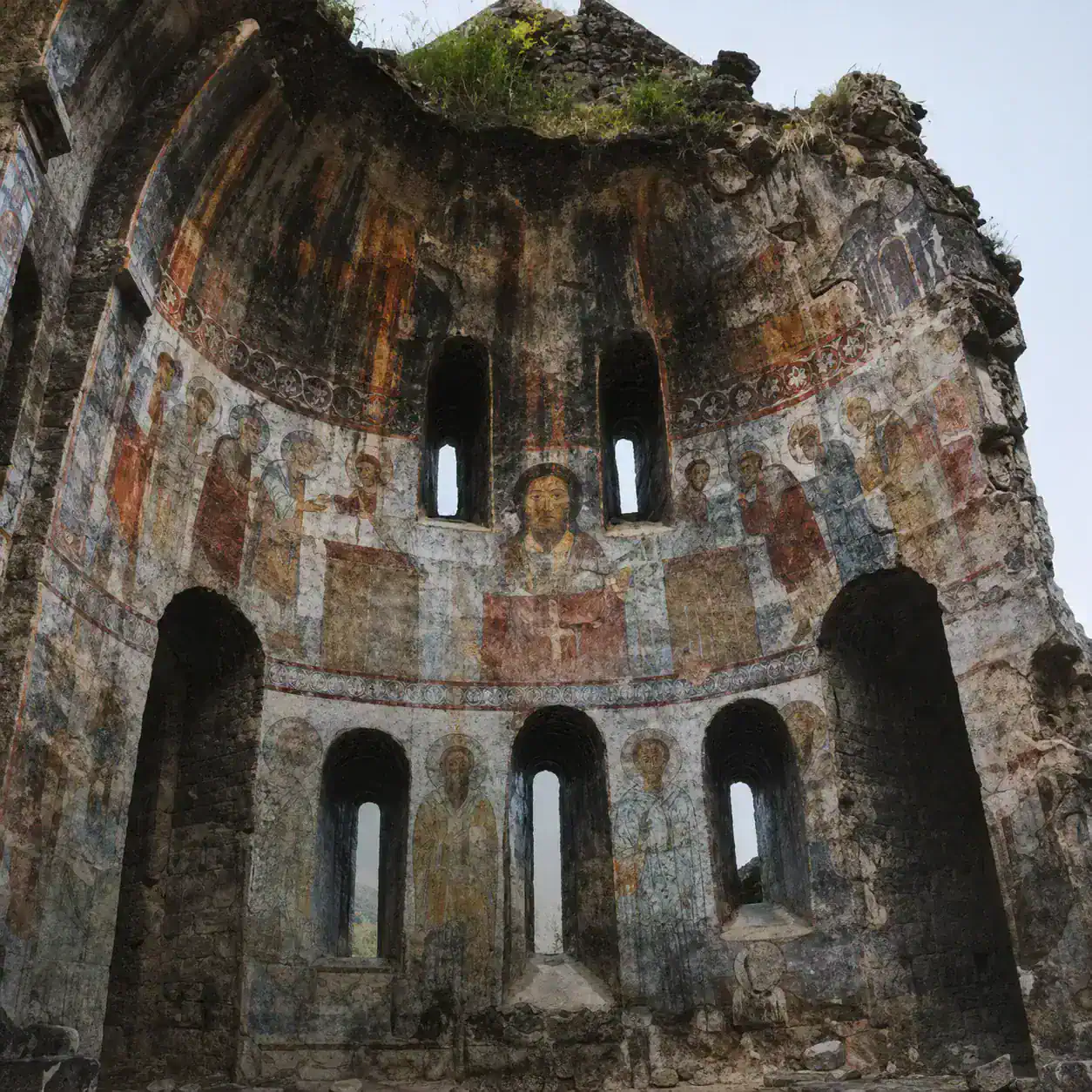
The Great Church was built at the end of the 12th century on the complex's southeastern platform. A substantial part of the apse, the northern and western walls, and the lower courses of the southern wall have survived from the structure. The interior of the basalt walls was plastered and painted. Fragments of the murals are visible today in the apse and on the northern wall of the platform.
Kobayr's murals are among the rare surviving examples of 13th-century Armenian monumental painting. Art historian Irina Drampian identified in them a flat compositional structure, restrained movement of the figures, pronounced outlines, and an Eastern Christian style.
According to Tamara Dadayan's research, Kobayr depicts the ritual type of the Mystical Supper with a Communion scene. The composition is divided into two symmetrical parts, and Christ is depicted twice, giving communion to the apostles on both sides.
At Kobayr, architecture, Armenian and Georgian inscriptions, and mural painting come together in a single place, reflecting the political, religious, and artistic interactions of 12th–13th century Lori.