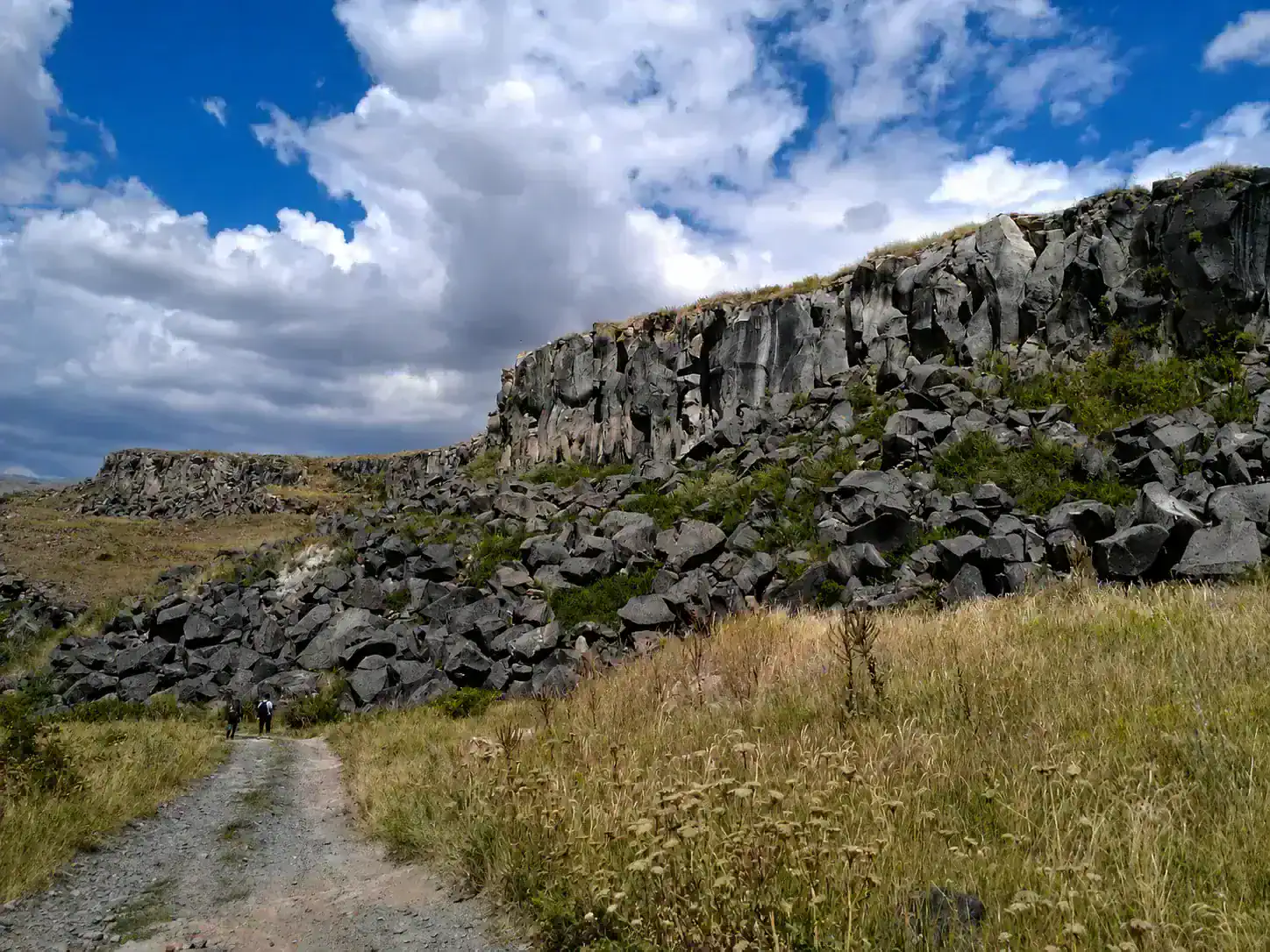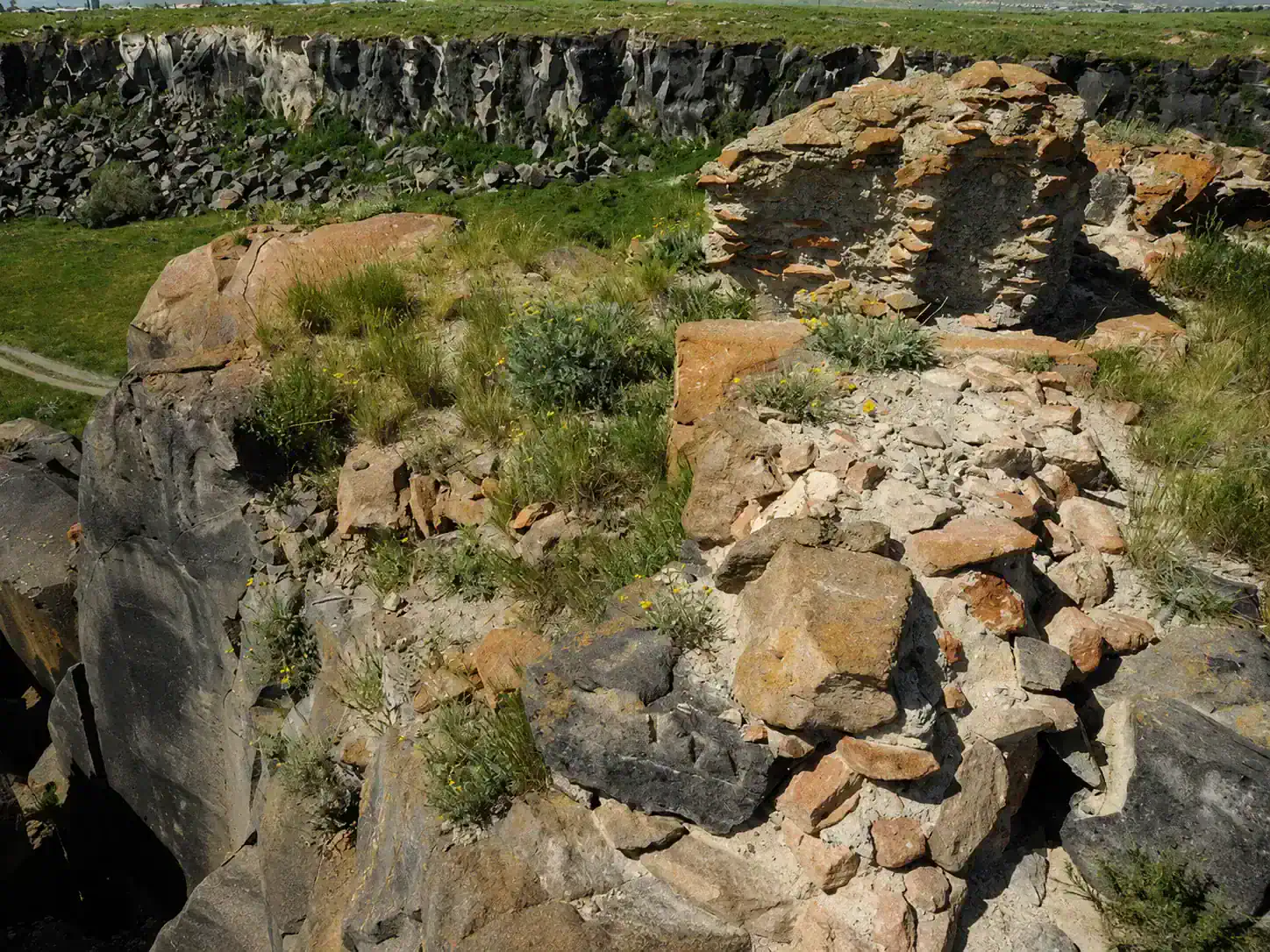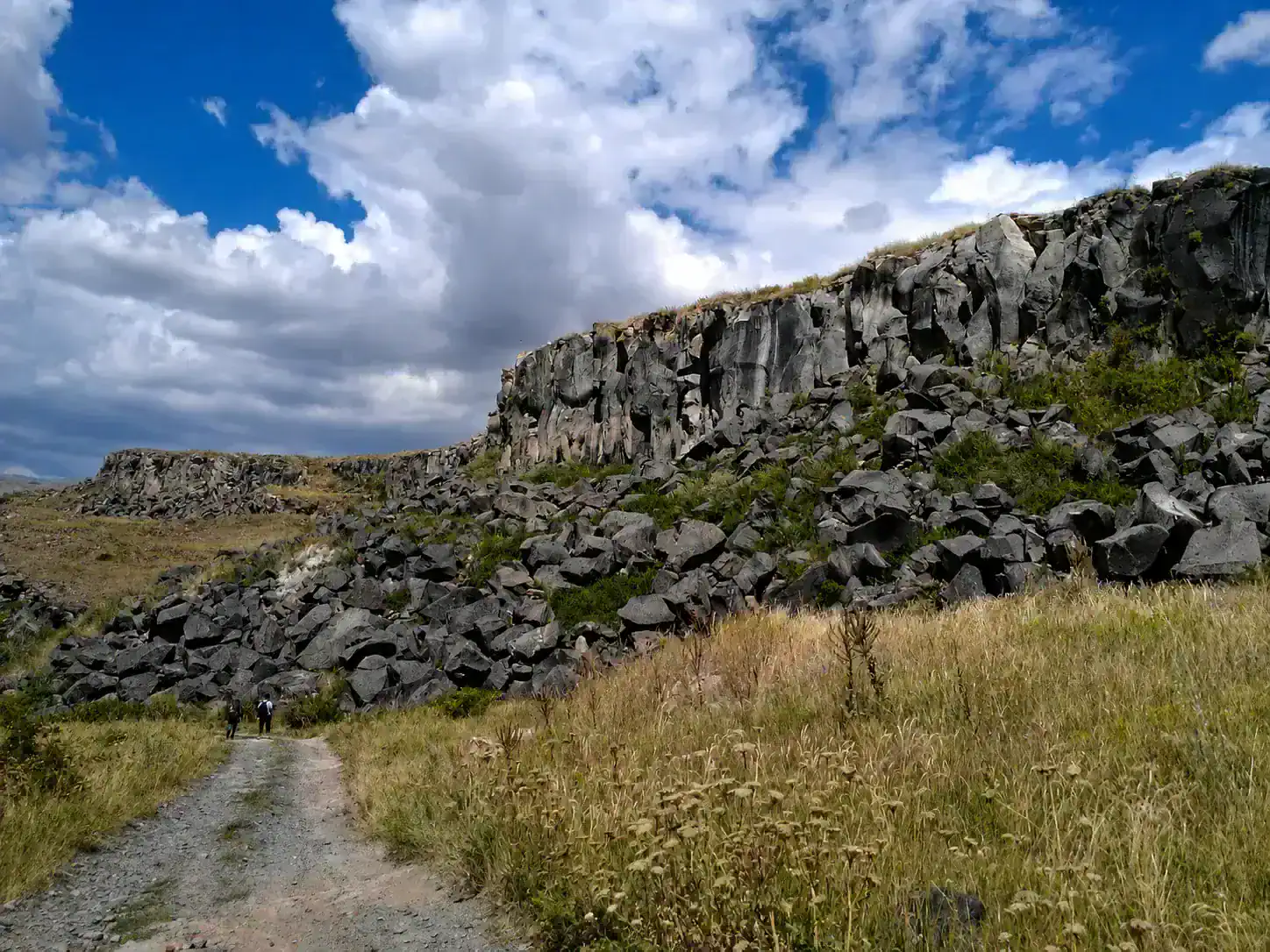
Vahramaberd Fortress is located in the Shirak region, in the left-bank canyon of the Akhuryan River, south of the Marmashen monastery complex. It sits on a promontory of the Akhuryan canyon and is presented as a "garrison-type" fortress built by Vahram Pahlavuni in the 10th century.
The fortress bears the name of Prince Vahram Pahlavuni. Vahramaberd is set on a narrow, elongated terrace, its walls bordering the terrace's steep sides — so that the sharp natural slopes themselves became part of the defensive system here.
Individual rooms open on the right and left of a central corridor running lengthwise. This layout suggests they served as barracks.
In peacetime the garrison lived in the neighboring settlement, while the fortress itself, where weapon and food stores were to be kept, was used for sentry duty. This is also attested by the remains of large and medium-sized storage jars (karas) found in Vahramaberd's excavated rooms, now held in the Shirak Regional Studies Museum.
The excavations at Vahramaberd were carried out by archaeologist Sergey Harutyunyan. A cuneiform inscription of Argishti I is also carved on one of Vahramaberd's rocks, concerning the conquest of the land of Eriakhi and the capture of the cities of Irdaniuni and Ishgidulu.
A little distance from Vahramaberd stands another fortress, Tirashen, which likewise belonged to Vahram Pahlavuni and formed part of Ani's defensive system. It is surrounded by fortress walls built of large, undressed fieldstones laid without mortar.
Near the fortress the "Tirashen" village site (4th–11th centuries) has been preserved, with the remains of its cruciform church, a four-sided stele, and a cemetery (4th–11th centuries).