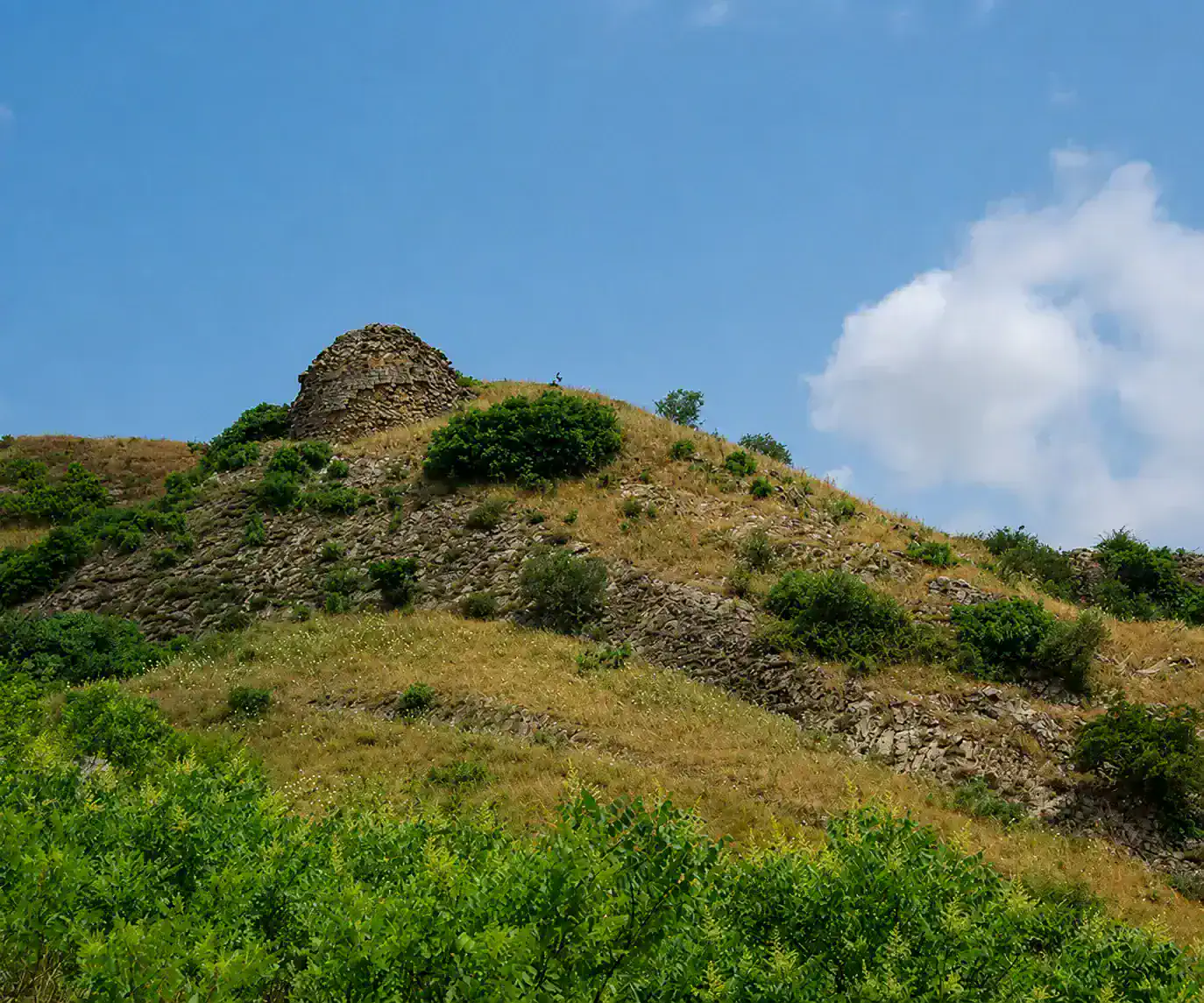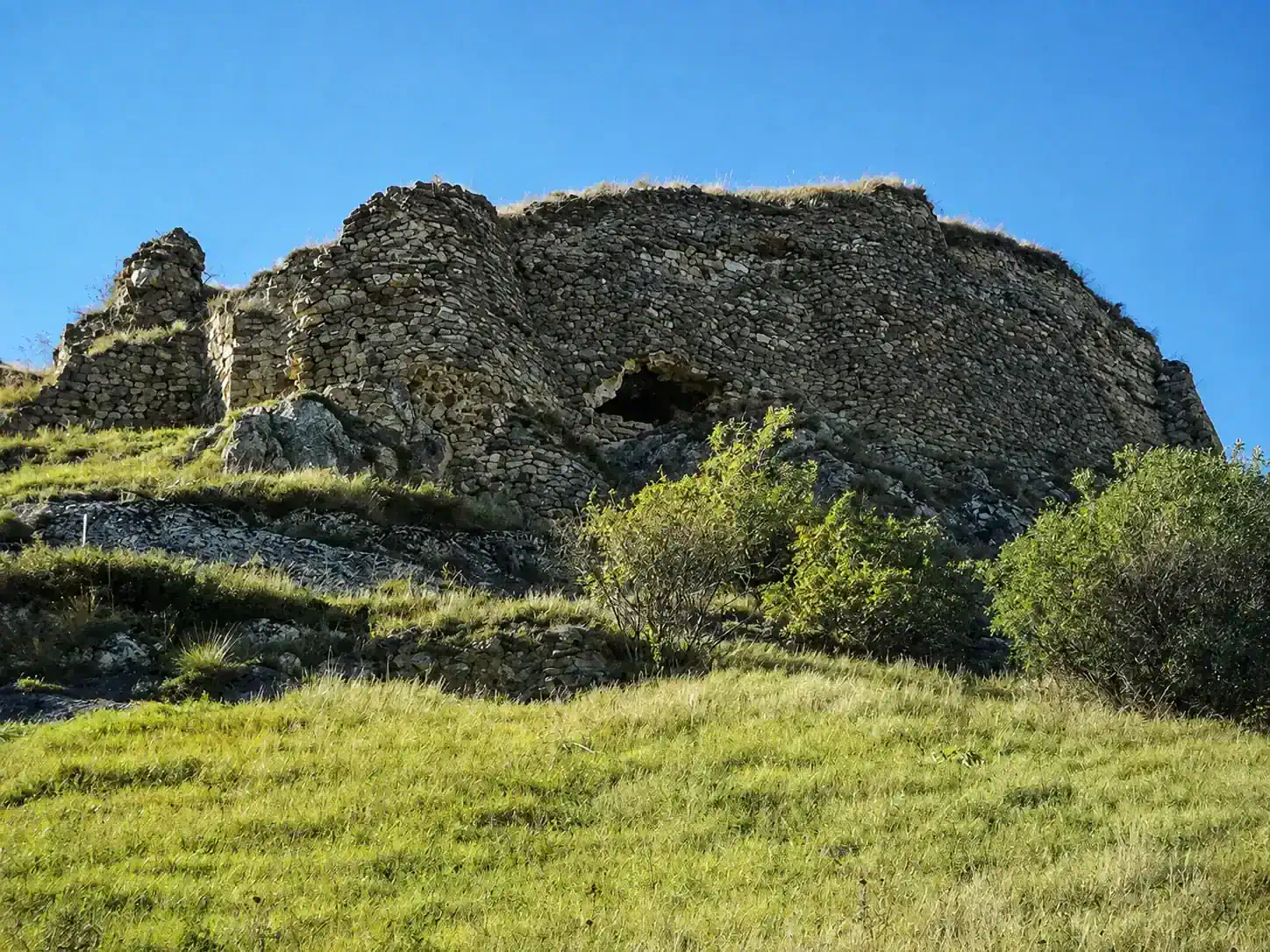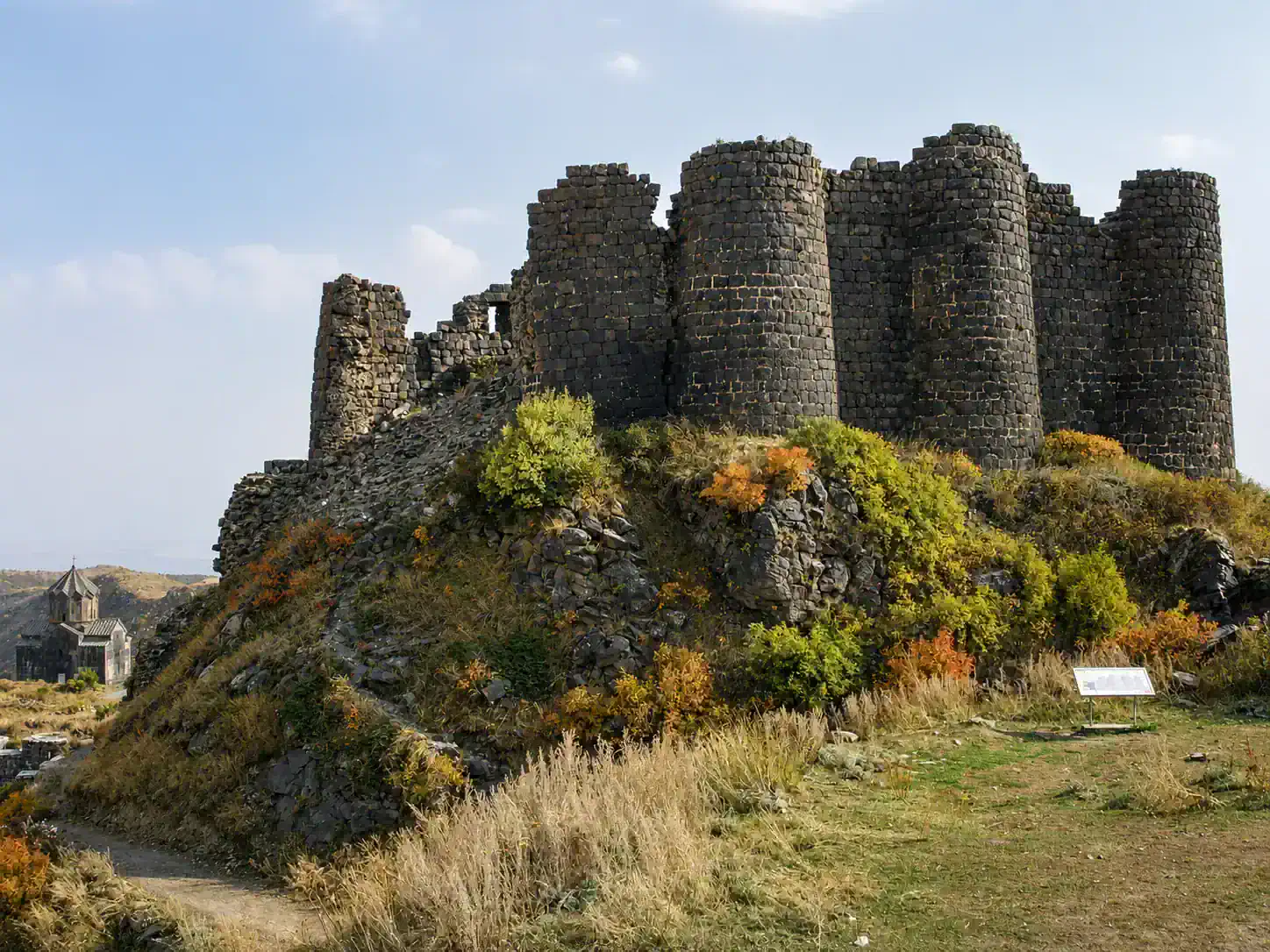
Tavush Fortress stands in the southeastern part of Berd town, on a rocky hill on the eastern bank of the Tavush River. It consisted of an upper citadel (about 500 sq. m) and a larger lower fortress; the more accessible north side was protected by thick walls and semicircular towers, while a near-vertical cliff defended the south.
No inscription confirms its construction date; it is presumed built by Smbat I Bagratuni between the late 9th and early 10th century. A notable episode is the rebellion of Tslik Amram: per Hovhannes Draskhanakertsi, in 921 Amram, governor of Uti, sheltered his family here while rebelling against Ashot II Yerkat, whose royal army was defeated and forced to retreat — hence the fortress's popular name, "Tslik Amram's Fortress."
The lower fortress's most interesting structure is the Holy Mother of God Church. A five-line inscription found during 1988 excavations shows it was built in 1019, destroyed by the 1138 Gandzak earthquake, and restored the following year by the Kyurikian ruler Abas. It is a small, single-nave hall with a southeastern sacristy and a later north gavit.
The fortress passed over time from the Bagratunis to Byzantium, then the Kyurikians, the Seljuks, and the Vahramians, and was besieged for the last time by Mongol forces in 1236. Afterward, the Mongols reportedly took the fortress's old Gospel and put it up for sale; in 1238 the priest Sargis and local believers bought it back and gave it to Vanakan Vardapet. Excavations in 2020–2022 uncovered a reservoir and clay water-pipe sections in the citadel.