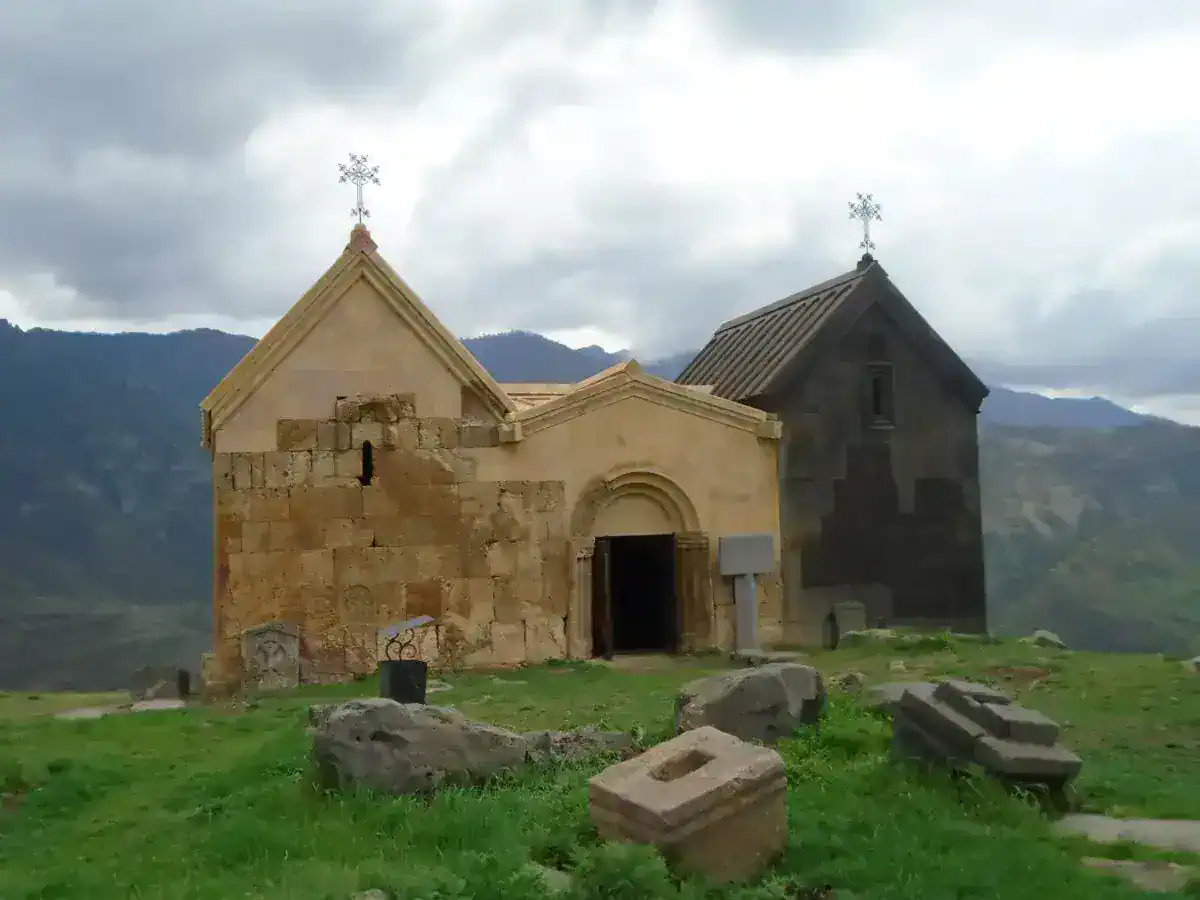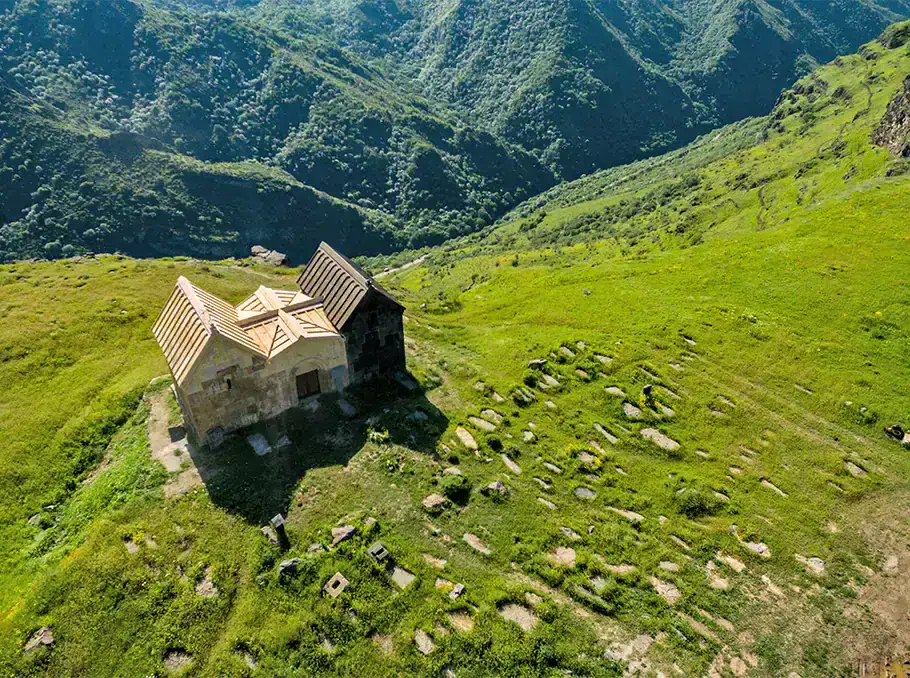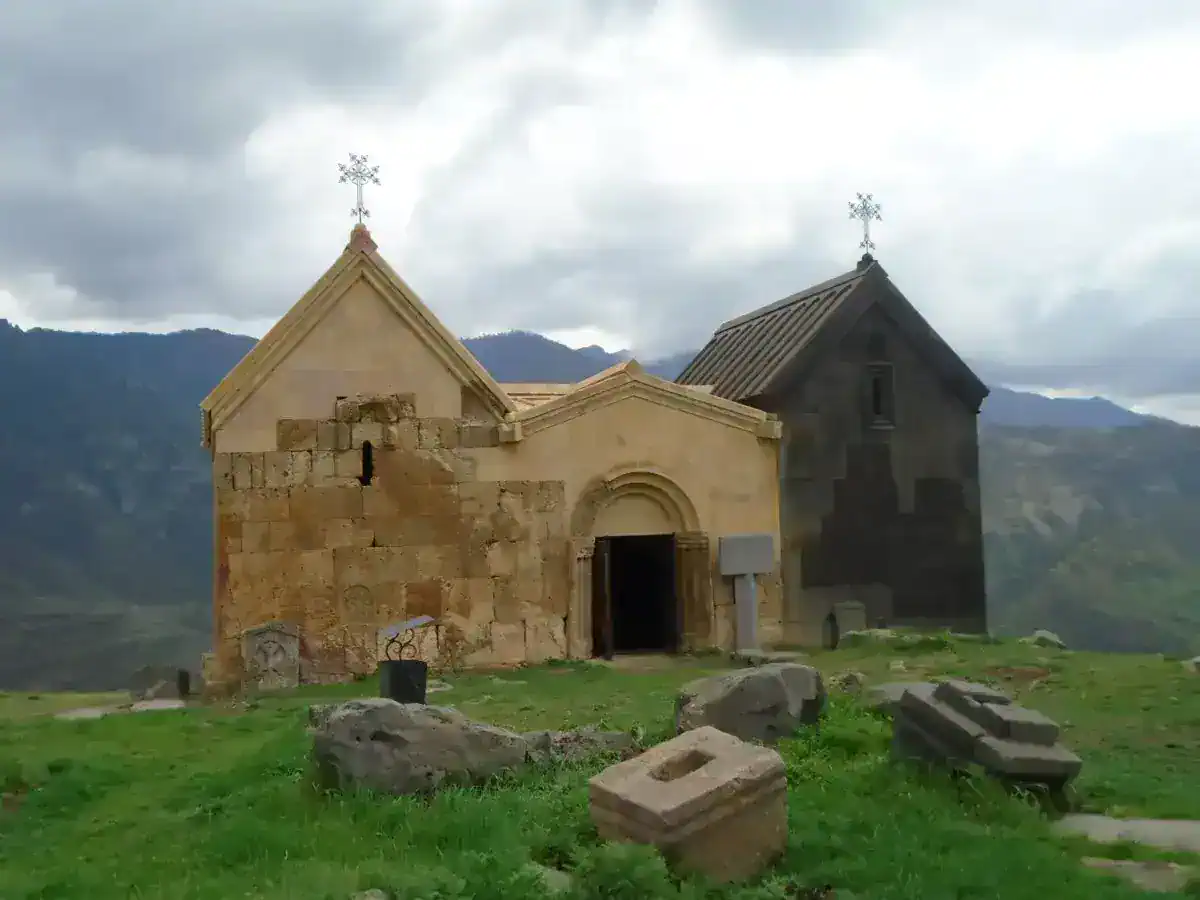
Horomayr Monastery is located in the Lori region, 1.5 kilometers southeast of the village of Odzun. The complex is divided into two sections, situated on the left slope of the Debed River gorge.
The earliest of three adjoining structures is the middle Surb Nshan Church, which Zakare and Ivane Zakaryan built in 1187. The southern church, dedicated to Sargis, was added in 1201, and the northern church-bell tower in 1290.
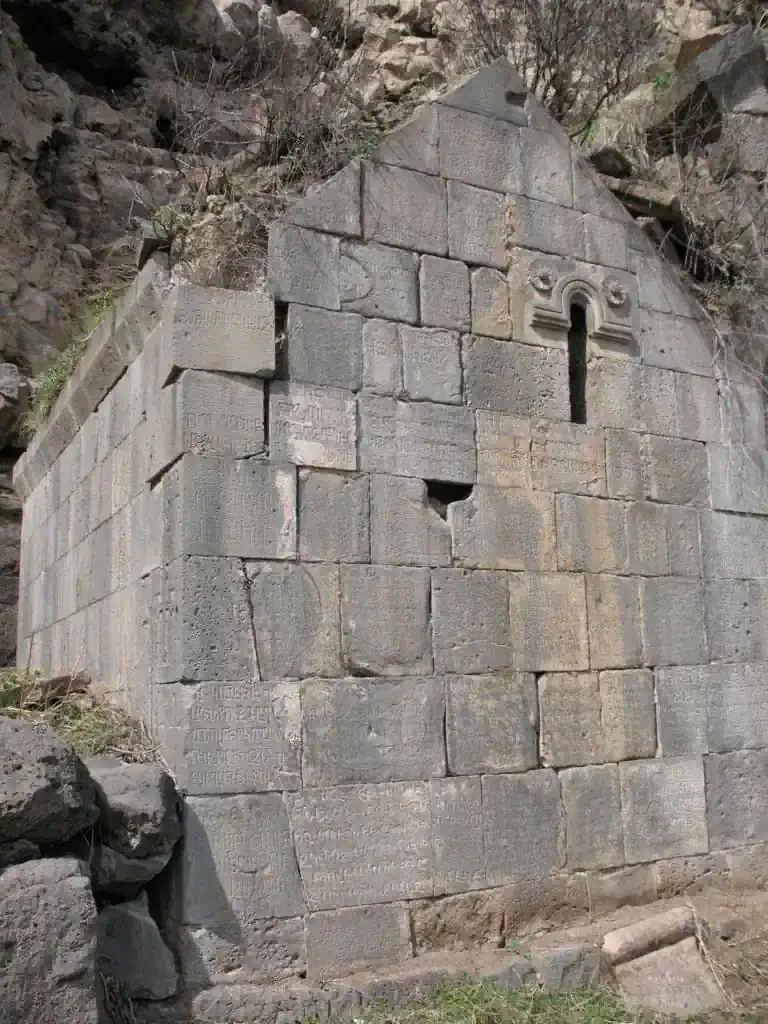
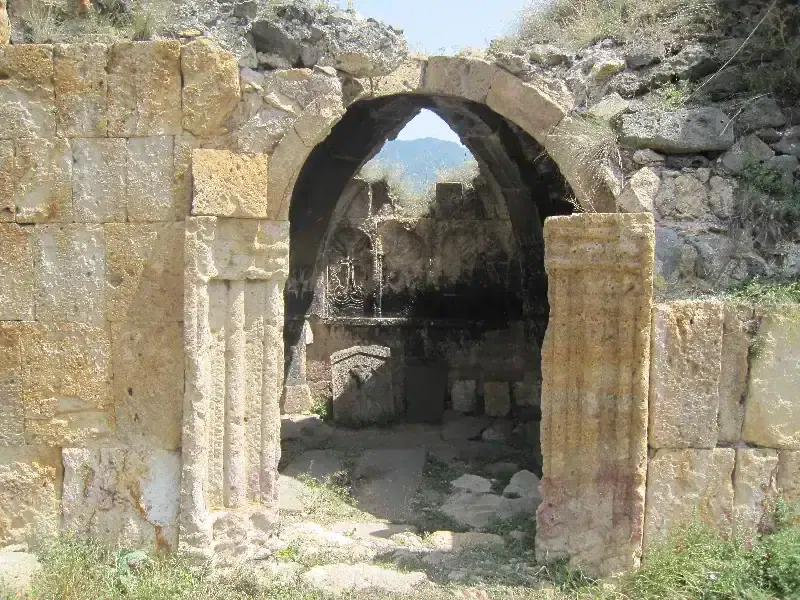
The northern entrance of the church-bell tower is framed with woven-style decorative moldings. Angels are carved on either side of the entrance, and an image of Christ above it. The rotunda's square and octagonal columns follow one another, and the pointed arches are made of yellowish felsite. In the lower complex, rock-cut cells, chapels, and caves have also survived, which monks used for solitude and prayer.
The churches, chapels, caves, and burial sections were adapted to the natural relief. In some places, the rock itself directly became part of a structure's wall or floor.
In the upper complex, the narthex stands out. The two arches forming its ceiling rise diagonally and meet at the center. Three older khachkars are set into the narthex's eastern wall. According to restoration architect Suren Abovyan, the narthex may originally have had a small rotunda above it, though it has not been reconstructed.
One of the oldest dated references to Horomayr relates to the year 773, when Kirakos Gandzaketsi mentions David Horomayretsi among the notable vardapets (scholar-priests) of the time.
The monastery's scriptorium activity continued into the 17th century as well. In 1658, the priest Ohan completed the copying of the Mashtots (ritual book) and the Gospel at the Surb Nshan Church of Horomayr village. The colophon also mentions Bishop Poghos as the monastery's caretaker.
Although historical references to Horomayr date back to the 7th–8th centuries, most of the main structures standing today were built during the period of Zakaryan rule.