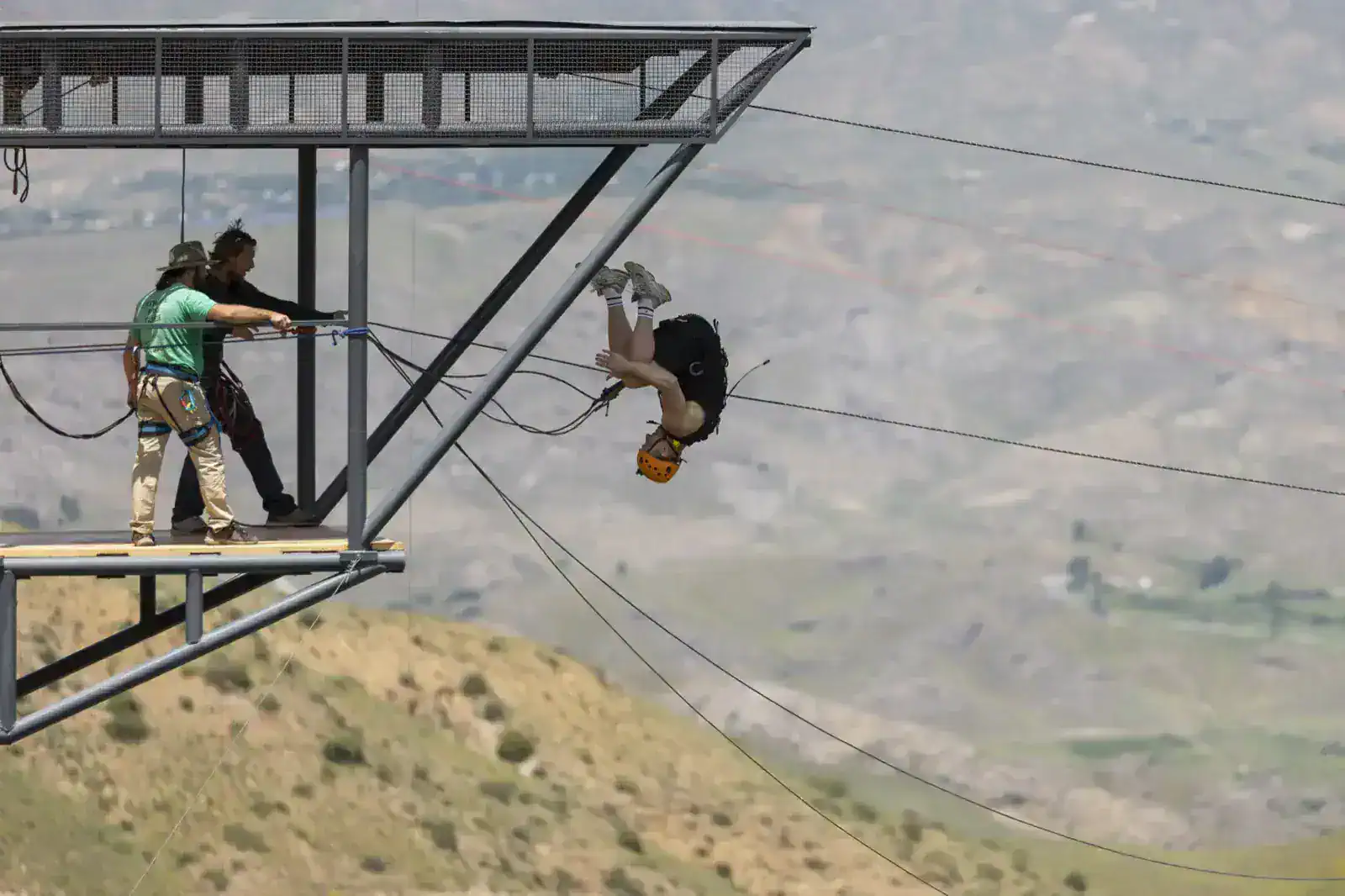
 Adventure
Scream of Souls
Yerevan
Scream of Souls
Adventure
Yerevan
Scream of Souls
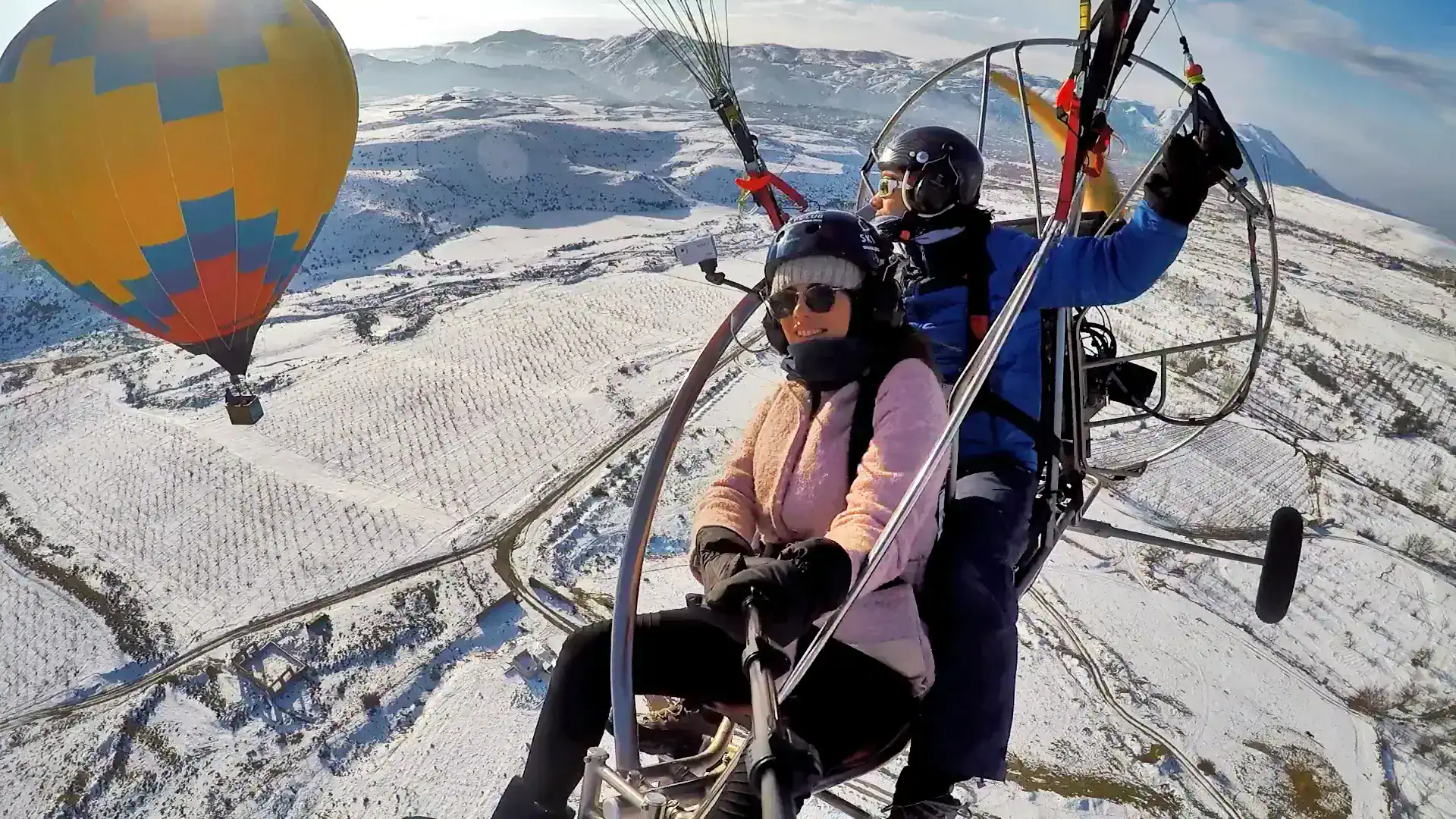 Adventure
Yerevan
sky club
 Cultural
Yerevan
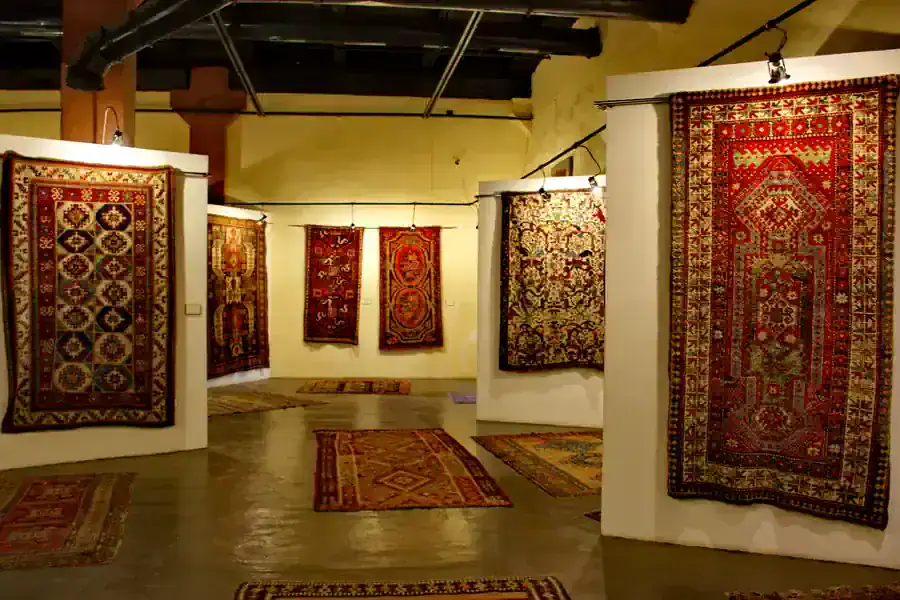
Megerian Carpet ist eine Kombination aus aktiver Fabrik, Museum und Verkaufsraum in Jerewan und führt eine Teppichknüpf- und Restaurierungstradition fort, die die Familie Megeryan 1917 in den USA begründete. Das Museum zeigt eine umfangreiche Sammlung armenischer und orientalischer Teppiche, darunter seltene Stücke aus dem 17. Jahrhundert. Bei einer Führung beobachtet man Weberinnen am Webstuhl, erfährt mehr über traditionelles Färben mit natürlichen Materialien und kann im Ausstellungsraum Teppiche ansehen oder kaufen. Vor Ort gibt es zudem das Restaurant Megerian Carpet. Was man tun kann: geführte Tour durch Fabrik und Museum, Live-Vorführungen von Weberei und natürlichem Färben, Besichtigung der historischen Teppichsammlung, Kauf handgeknüpfter Teppiche, Essen im angeschlossenen Restaurant.
 Nature
Yerevan
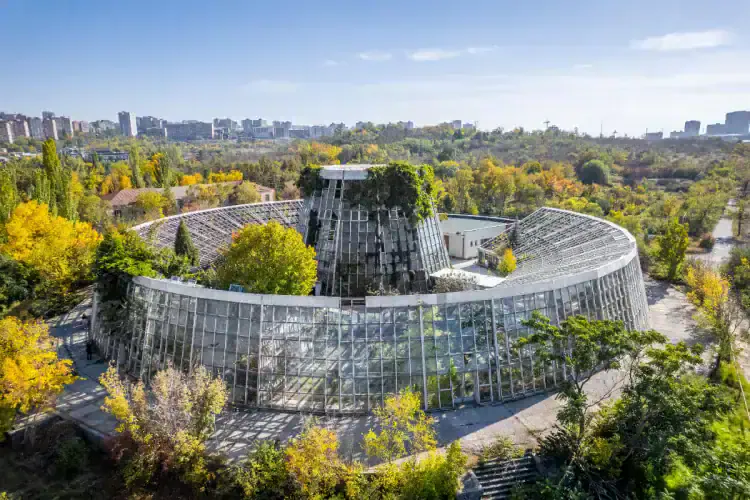
The Yerevan Botanical Garden, run by the National Academy of Sciences of the Republic of Armenia, was founded in 1935 and reconstructed between 1945 and 1950 under architect Hrayr Isabekyan (original design by Georgi Murza). It spans 80 hectares between the Kanaker and Nor Nork heights on Acharyan Street, with a main entrance on the Kanaker side connected by a wide avenue to a second entrance on Myasnikyan Avenue. The garden holds roughly 1,100 plant species, including Armenia's wild, medicinal, and fruit-bearing trees, about 200 species of wild relatives of cultivated plants, around 70 rare and endangered species, and tropical/subtropical plants, along with a small central rose garden. Since 2008, it has also hosted a Paleobotanical Museum (supported by the Volkswagen Foundation) displaying fossil plants from Armenia, including ancient maple, oak, and poplar specimens. What you can do there: walk the garden's paths among native and rare plant collections, visit the rose garden, and see the Paleobotanical Museum's fossil-plant exhibits.
 Nature
Yerevan
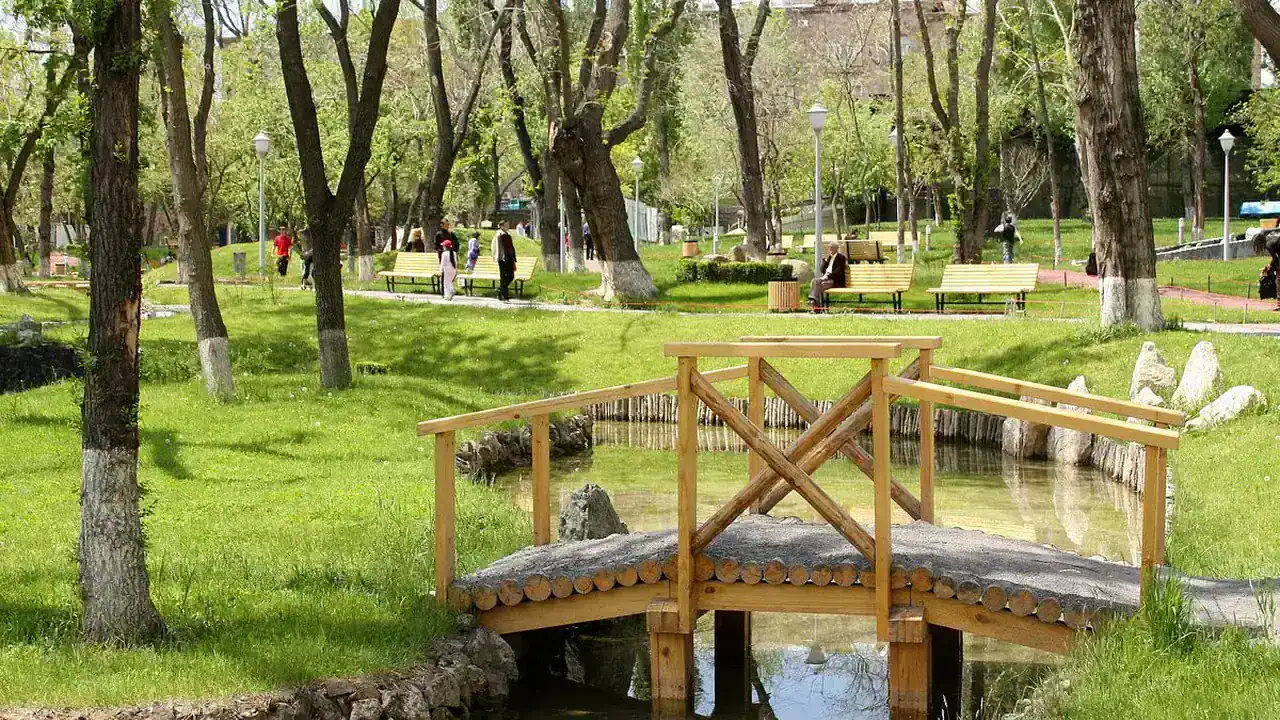
Lovers' Park has a history dating to the 18th century, when it was known as Kozern Park; it was later renamed Pushkin Park, then Barekamutyun (Friendship) Park, before becoming Lovers' Park in 1995. Some of its trees are over 150 years old. Between 2005 and 2008, the park underwent a complete renovation led by the Boghossian Foundation, with French designer Pierre Rambach creating a Japanese-inspired landscape — making it the first and only Japanese-style park in Armenia; it reopened in November 2008. The design includes winding paths, an artificial pond with islands, cascading waterfalls, and bridges. An island in the lake serves as a stage facing a 200-seat amphitheater, and the park features sculptures including "Union of Love" (2017), "Armenuhi" (1968), "The Three Elephants" (2017), and "Obsidian Heart" (2014), plus a small café with outdoor seating. The park has no steps, making it wheelchair-accessible throughout.
 Nature
Yerevan
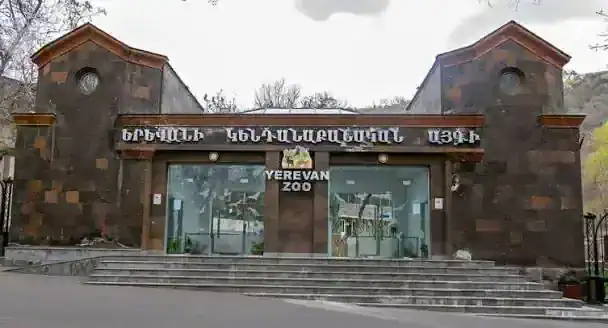
Yerevan Zoo was conceived in the 1930s and formally founded in 1940 by decision of the Supreme Council of the Armenian SSR; construction began in 1941 and finished in 1950. Today it's a 35-hectare municipal zoo housing around 126 species (roughly 707 individual animals), spanning native Armenian and Caucasus wildlife — Syrian brown bears, bezoar goats, Armenian mouflon, vipers, black vultures, Caucasian lynx — alongside animals from other continents, including African lions, Bengal and Siberian tigers, spotted hyenas, and an Indian elephant.
 Nature
Yerevan
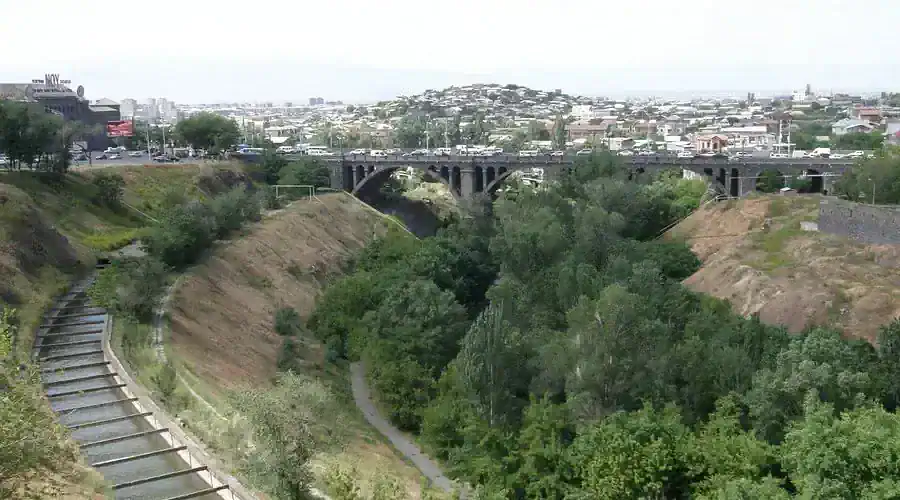
Hrazdan Gorge is a natural canyon running through the heart of Yerevan along the Hrazdan River, long overlooked by visitors but well known to locals for its hidden viewpoints and mix of Soviet-era structures and untouched nature. It can be reached from the Victory Bridge/Mashtots Avenue area or via a roughly 460-meter illuminated Soviet-era tunnel connecting Saryan Street to Dzorapi Street. Inside the gorge are the Soviet-era Children's Railway (a working miniature railway with three small stations, operating May–October), the Hrazdan Stadium built into the gorge wall, a small amusement park, and a hydroelectric dam. The gorge is spanned by three major bridges — Victory, Kievyan, and Davitashen — each offering different photo vantage points, and it's also the site of Yerevan Zipline Airlines, reportedly the longest zipline in the region (about 870 meters) and the only one in the world passing underneath a bridge. Since 2019, the gorge has hosted the Urvakan electronic-music festival each May. Nearby, at the edge of the gorge, is Tumo Park with its urban art and renovated Soviet fountains. What you can do there: walk the riverside trails, photograph the gorge from its three bridges, ride the Children's Railway (seasonal), ride the Yerevan Zipline Airlines line under Davitashen Bridge, see the Hrazdan Stadium, stroll through Tumo Park, and attend the Urvakan Festival if visiting in May.
 Adventure
Yerevan
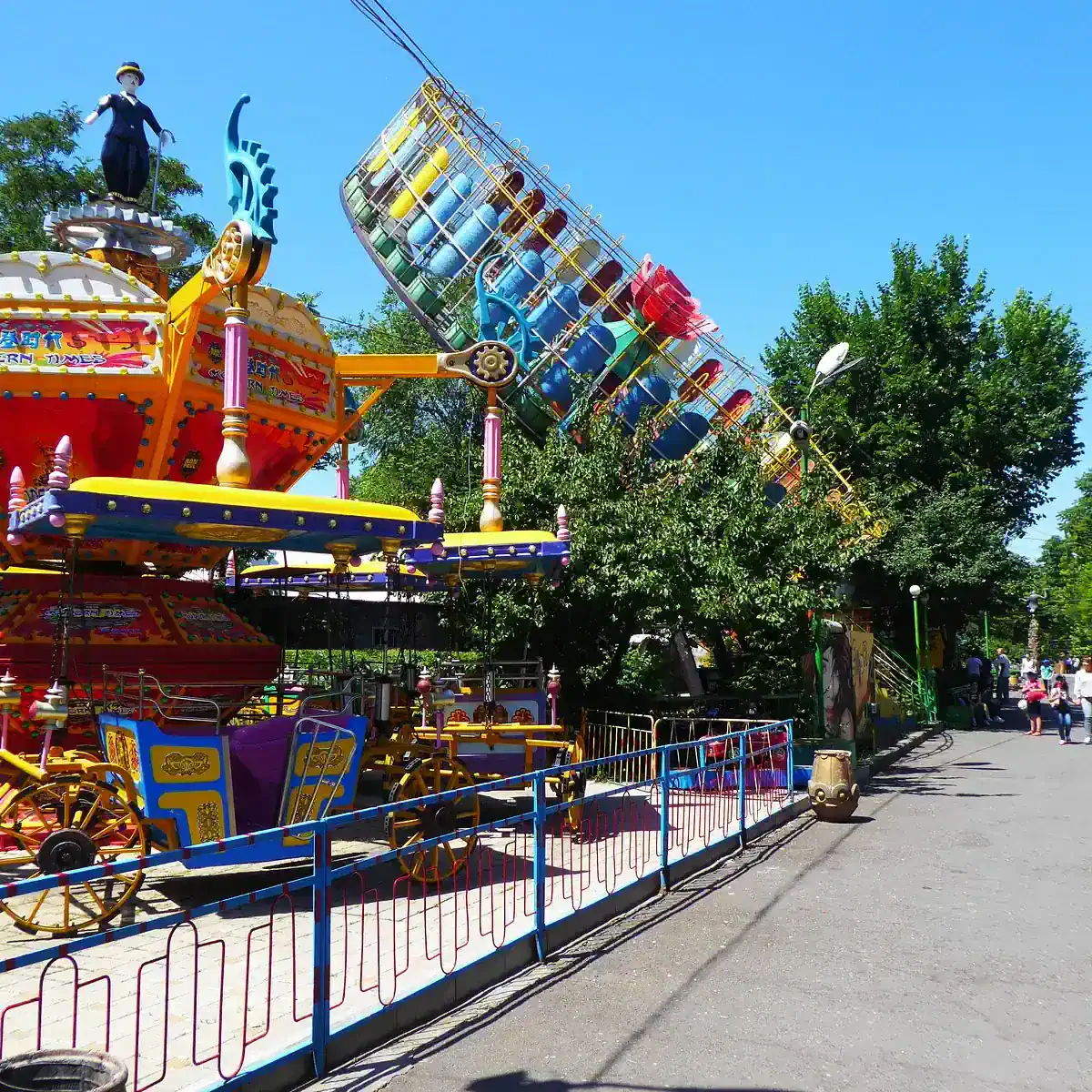
The amusement section of Victory Park — historically nicknamed "Monument" after a Stalin statue erected there in 1950 — was founded in 1951 by Hakob Umrikyan under the Kanaker-Zeytun House of Culture, and grew into one of Yerevan's favorite recreation spots. Its first carousel (a "Rocking Boat") was installed in 1955–56, the popular Aragil restaurant (designed by architect Rafael Israelyan) opened in 1959, and the artificial lake "Arevik" was built between 1958 and 1961. Today it operates as a modern amusement park with rides including a Ferris wheel ("Wheel of Happiness"), an autodrom (bumper cars), a swan-shaped water ride, a "Mars" ride, a rotating tower, a pendulum ride, a "Moto UFO," a "Rocket" kids' ride, a "Zombie Castle," and VR cinema experiences. What you can do there: ride the Ferris wheel and other attractions (bumper cars, swan boats, pendulum, rotating tower, VR cinema, and more), suitable for families and children.
© 2026 Armenia Discovery. Alle Rechte vorbehalten.
Powered by Munich Ventures